

- Crushing
Share This Post
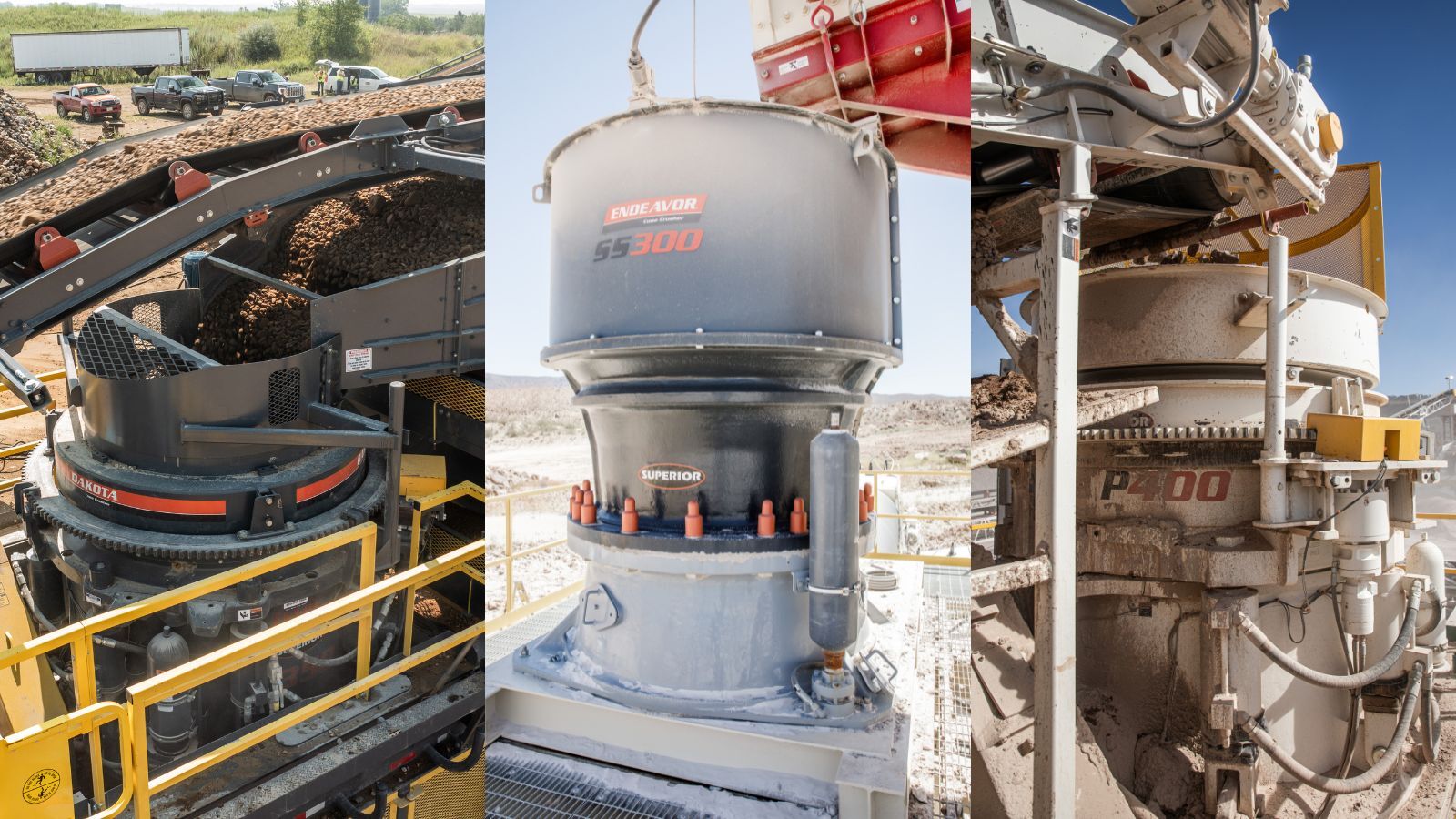
For years, choosing a cone crusher was fairly straightforward. Most manufacturers built a single design and adapted it to fit a wide range of applications.
“If you go back 30 years, it was common for each manufacturer to offer just one style of cone,” says Jeff Gray, director of equipment sales at Superior.
That approach worked, until operations became more specialized. Today, crushing conditions vary widely, and so do the machines built to handle them.
However, some preferences still come down to experience.
“In many regions, loyalty follows the dealer,” Gray explains. “If a brand was supported well and performed reliably, that style of machine stuck in a particular dealer's territory.”
But familiarity doesn’t always equal fit.
“When you really break it down, each cone design has applications where it performs best,” Gray says.
Understanding those differences is where performance gains begin.
The Bushing Cone: Wide Application, Proven Results
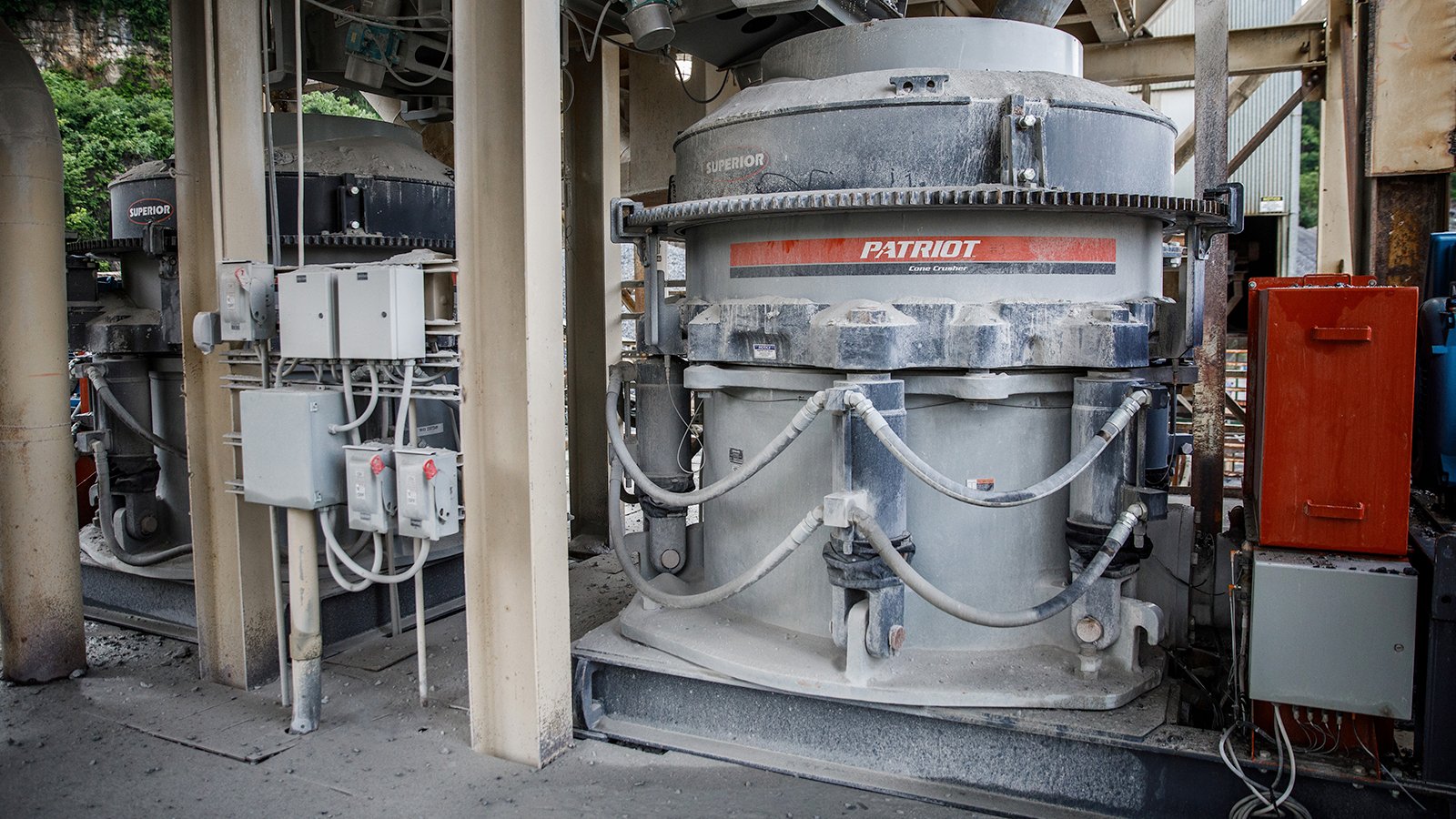
The high-speed bushing cone is the most widely recognized style in the industry. In fact, Jeff Gray calls it “likely the most installed crusher model in the world.”
That popularity comes with an advantage. Designs like Superior’s Patriot® Cone Crusher are backed by decades of real-world application, giving operators a well-understood and dependable option.
Inside the machine, feed enters the chamber as the head oscillates on an eccentric mounted to a fixed shaft. Material is compressed against the stationary bowl liner until it fractures and exits the crusher.
Bushing cones handle a wide range of applications, tolerate misapplication better than most, and make strong use of available horsepower. They also support a variety of liner profiles, which adds flexibility across different crushing needs.
A moderate head angle and multiple hydraulic cylinders help maintain steady performance. However, the design naturally generates more heat, requiring larger oil systems with increased cooling capacity. In portable setups, that can limit some flexibility.
However, automation is helping offset those challenges.
“We’re all challenged with finding skilled technicians to operate and service equipment,” Gray says. “Automation helps bridge that gap by protecting the machine from inexperienced operation.”
With built-in feedback, the system alerts operators when feed is too large or when excess fines are present, making real-time adjustments to reduce the risk of damage.
The Roller Bearing Cone: Efficient by Design
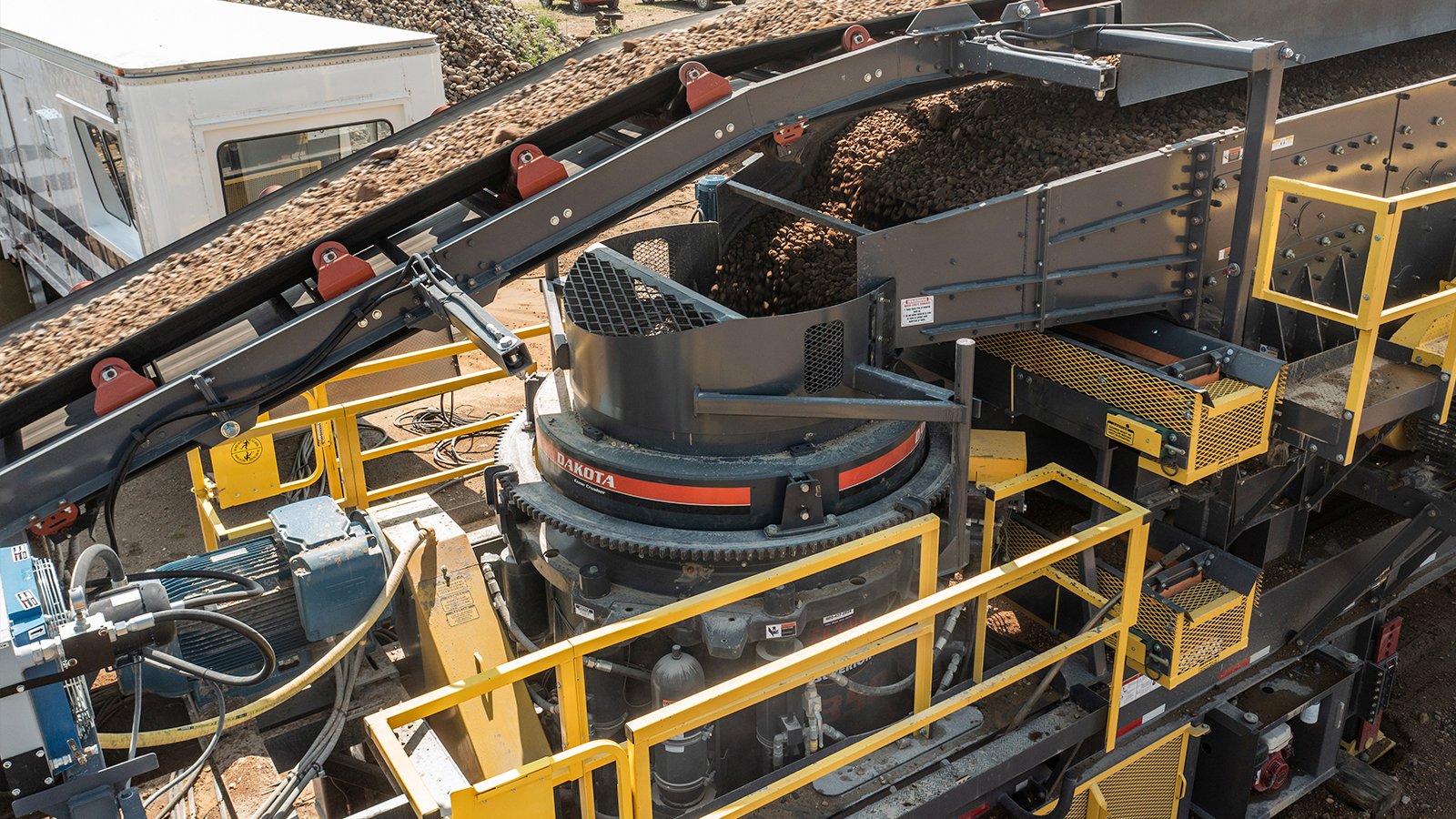
Roller bearing cone crushers, like Superior’s Dakota® Cone, replace traditional bronze bushings with tapered roller bearings, changing how the machine operates from the inside out.
“The roller bearings deliver the lowest horsepower per ton in our lineup,” says Gray. “With less friction, we generate less heat.”
That efficiency has a ripple effect. Lower heat means less oil is needed for cooling, which allows for a smaller lubrication system.
That smaller footprint creates real advantages in the field.
“It lends itself well to portable chassis,” Gray explains.
Beyond efficiency, the design brings strength and control. Hydraulic anti-spin features and higher clamping forces help the crusher maintain performance under load.
The result is a machine that thrives in tougher conditions, handling dirty feed, producing more fines, and delivering higher overall tonnage.
The Spider Bushing Cone: Built for Bigger Feed
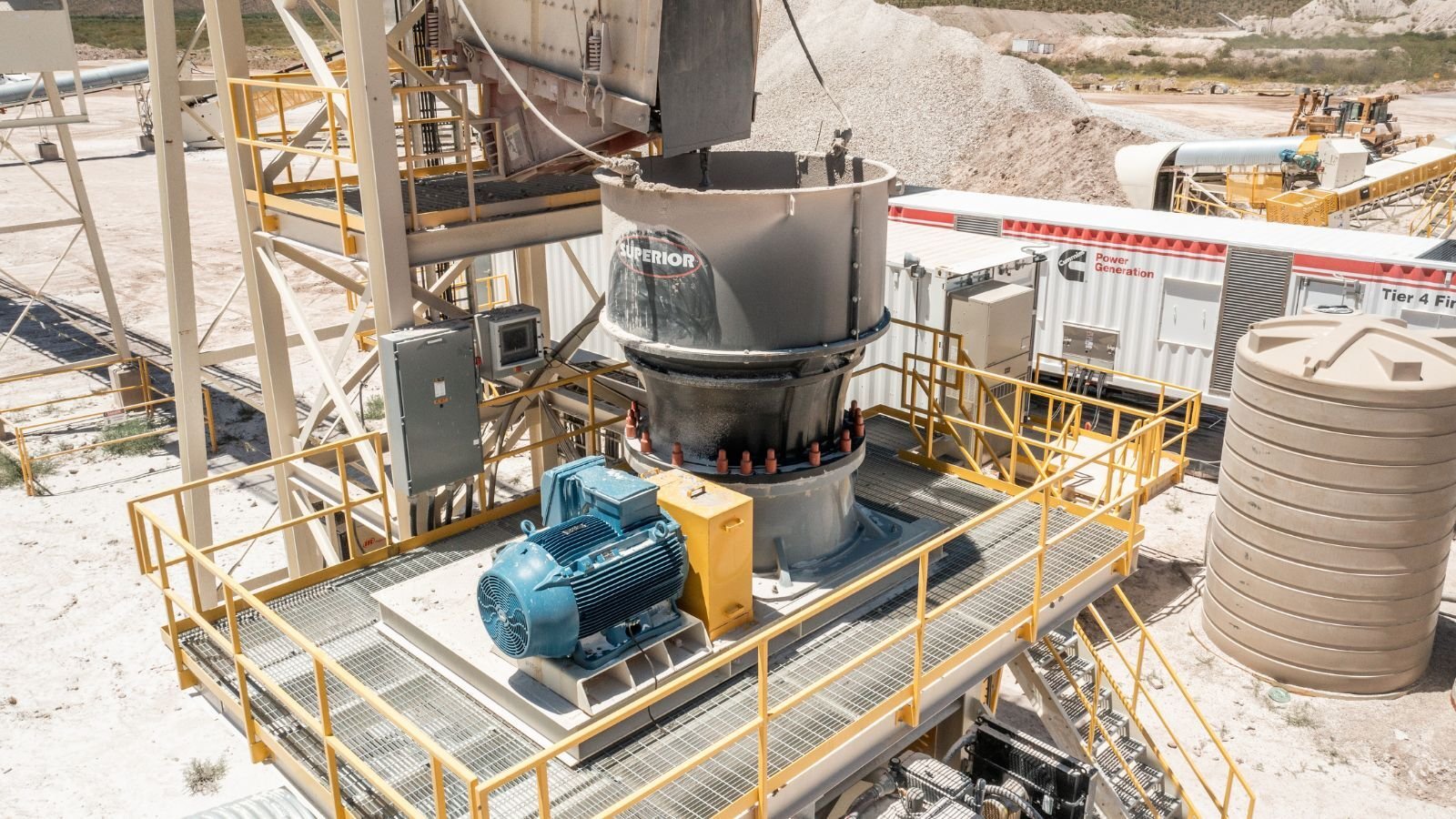
The third design, represented by Superior’s Endeavor® Cone Crusher, takes a simpler, more direct approach.
“It’s a very simple machine,” says Gray. “If you put the different models side by side, this one stands out right away.”
At the center of the design is a single large hydraulic cylinder that handles both adjustment and overload relief. It’s paired with a spider bushing configuration and a steeper head angle, creating a layout built for tougher feed conditions.
That simplicity pays off when material gets larger.
“Where other crushers might top out around 12-inch feed, the Endeavor can handle closer to 15 inches in certain setups,” Gray explains.
That capability can shift the economics of a plant. In some cases, operators can use a smaller horsepower machine in a position that would otherwise require a larger cone to accept the same feed size.
The design also handles a higher percentage of fines without compromising performance. And unlike other styles, it maintains a consistent feed opening throughout liner life, eliminating the need to adjust feed size as liners wear.
It can even be adjusted under full load, keeping production moving without interruption.
Cone Crusher Comparison: Which Fits Your Operation?
| FEATURE | BUSHING CONE | ROLLER BEARING | SPIDER BUSHING |
| Application | General use, wide applications | Efficiency, lower operating cost | Large feed, high fines |
| Feed Size | Moderate | Moderate | Largest capacity |
| HP per Ton | High horsepower utilization | Lowest HP per ton (most efficient) | Application dependent |
| Heat/Oil | Higher, larger oil system | Lower, smaller oil system | Moderate |
| Tolerance to Misapplication | High | Moderate to high (per application) | Lower, requires proper application |
| Fines Handling | Good | Good (handles dirty feed well) | Very strong (high fines tolerance) |
| Liner Wear Impact | Feed opening reduces over time | Feed opening reduces over time | Maintains feed opening |
| Portability Fit | Good | Best | Less common in portable setups |
| Standout Trait | Proven, forgiving, widely used | Efficient, cooler running | Handles larger feed, consistently |
Send this Tech Tip to your inbox.
Want to read this later? Enter your info and we’ll email you a link to this article.