


- Crushing
Share This Post
Superior’s presence in the VSI crushing market has grown significantly since acquiring the former CEMCO in late 2023. With market share doubling last year, more Superior VSI crushers are starting to show up in the field. That makes this a good time to reinforce the importance of regular inspections and proactive maintenance.
Unlike compression-style crushers like jaws and cones, a VSI relies on continuous, high-speed impact to fracture material. That means wear occurs faster, and even a single neglected component can throw the machine out of balance, leading to severe vibration or structural damage. Regular maintenance isn’t just beneficial for a VSI—it’s essential to keeping it running safely and efficiently.
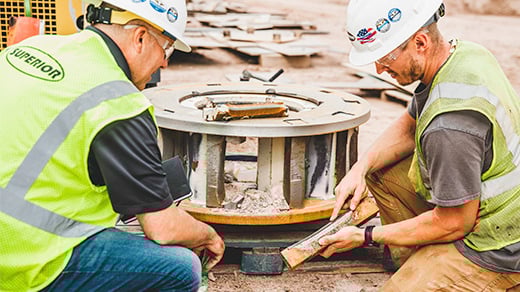
Why Frequent Inspections Matter
To understand just how critical maintenance is, we spoke with Kyle Ruschmeyer, one of Superior’s boots-on-the-ground crusher service technicians. He’s seen firsthand what happens when VSI maintenance is overlooked.
“Without frequent inspections, worn components can throw the machine out of balance, causing excessive vibration and structural damage,” says Ruschmeyer. “I’ve seen material wear right through the anvils and start cutting into the crusher body itself—turning a simple fix into a major repair.”
“If your customers don’t stay ahead of wear, a VSI will quickly start destroying itself,” he says.
According to Ruschmeyer, well-organized operators inspect their VSI crushers at the beginning or end of each shift to catch wear and misalignment before they cause larger issues. In high-abrasion applications like manufactured sand production or crushing quartzite, inspections may be necessary as often as every four hours.
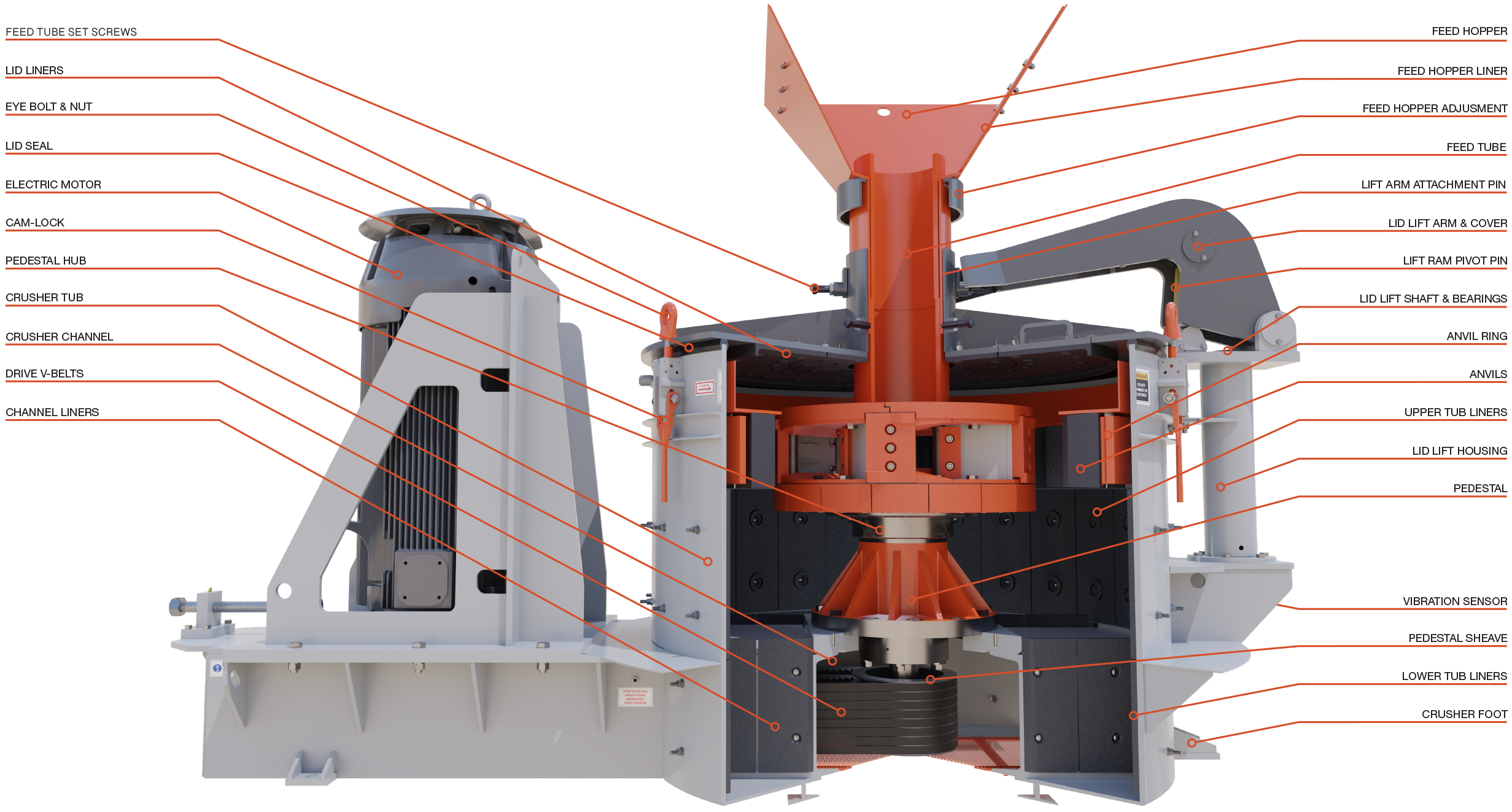
Cemco® T80 VSI Components Identification
A well-maintained VSI crusher delivers consistent product quality, reduced downtime, and longer component life. Here’s a breakdown of the critical areas to inspect and what to look for to prevent performance issues and costly repairs.
Rotor & Wear Parts
The rotor is the heart of a VSI crusher, spinning at high speeds to propel rock into wear surfaces. An unbalanced or worn rotor can cause excessive vibration, reduced efficiency, and structural damage.
- Rotor Tips: These take the brunt of the impact, shattering material upon contact. Look for rounding, chipping, or excessive wear, as this reduces crushing efficiency. Replace in sets to maintain balance and prevent rotor vibration.
- Table Liners: Protect the rotor’s base from excessive wear. Inspect for uneven wear patterns, cracks, or thinning. Replace them before they expose the crusher’s frame to direct impact.
- Rotor Balance: Replacing worn parts without maintaining balance can cause excessive vibration. Always replace opposite components simultaneously to ensure even weight distribution.
Bearings & Lubrication System
The high speed operation of VSI’s places a significant load on the bearings. Proper lubrication is critical to preventing premature wear, overheating, and catastrophic bearing failure.
- Oil Levels & Flow Meters: Ensure lubrication oil is at the correct level and circulating properly. Low oil levels lead to overheating and increased friction.
- Oil Contamination & Temperature: Monitor for water contamination, metal shavings, or sludge buildup. A rising oil temperature signals excessive friction or cooling failure.
- Bearings & Seals: Check for leaks, overheating, or excessive movement. Any sign of leakage or unusual vibration requires immediate attention to prevent failure.
- Vibration Monitoring: VSI crushers have shutdown switches triggered by excessive vibration. Frequent shutdowns could indicate rotor imbalance, excessive wear, or bearing issues.
Anvil Ring & Crushing Chamber
The crushing chamber is where rock fractures upon impact. VSI crushers use either anvil rings (rock-on-steel) or rock shelves (rock-on-rock) for material reduction.
- Anvil Condition: Anvils absorb high-impact forces. Inspect for wear, cracks, or misalignment. Flip them if wear is uneven, but never let them wear down to the base—this can lead to severe frame damage.
- Chamber Lining: In rock-on-rock crushers, check for material buildup that disrupts impact patterns and reduces efficiency.
- Material Build-Up: Excessive accumulation of fines or uncrushed material can block material flow, reduce particle shape quality, and cause uneven wear on impact surfaces.
Lid, Feed Hopper & Feed Tube
The feed system controls material entry into the rotor. Blockages, misalignment, or excessive wear can disrupt crushing performance.
- Lid Seal: Ensure the lid is securely closed and sealed to prevent dust ingress. Loose seals allow fine particles to escape, accelerating wear on surrounding components.
- Hopper Wear Plates: These protect hopper walls from material abrasion. Inspect for excessive wear, cracks, or instability.
- Feed Tube Alignment: A misaligned or excessively worn feed tube causes uneven material flow, leading to imbalanced rotor wear.
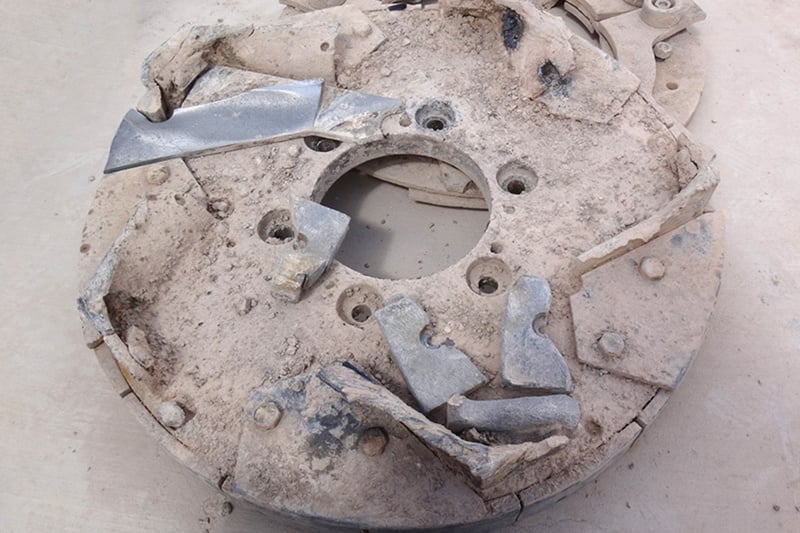
A destroyed rotor caused by an over-torqued bolt that snapped, allowing a feed disc to bounce freely during operation.
The Payoff of Proactive Maintenance
Regular VSI inspections may take time, but the cost of skipping them is far greater.
“It doesn’t take much – one worn part left unchecked – and suddenly your customer has a bigger problem on your hands,” says Ruschmeyer. “A few minutes of inspection can prevent days of downtime and thousands in repairs.”
Staying ahead of wear doesn’t just extend VSI life, it keeps production on track and prevents shutdowns that cut into profitability.
Send this article to your inbox.
Want to read this later? Enter your info and we’ll email you a link to the article.