

published: october 2026
Picture a construction and demolition recycling operation...what do you see?
Is the equipment track-mounted? Is it a patchwork of older, used machines? Is it regularly on the move chasing one small job after the next?
While that historically described a good portion of C&D recycling operations, it no longer tells the whole story.
“I feel like the economics are shifting and the industry is changing,” says Jeff Gray, Superior's sales director. “The value of materials is rising, and recyclers who rely on lower-cost equipment are rethinking their investments.”
Wheeled portables are finding a place in applications once dominated by tracks, recyclers are investing in higher-capacity plants, and some are moving toward semi-fixed or permanent operations for larger-scale processing.
 Download Superior's recycling equipment reference guide.
Finding the Right Recycler
For dealers, finding these prospects starts with a closer look at the cities throughout their territories.
“Even communities of 40,000 have established recycling operations,” Gray says. “There’s always demolition there creating material that needs crushing.”
Potential leads can come from several sources:
-
Excavation contractors handling concrete removal and processing
-
Concrete recycling yards accepting debris from multiple contractors
-
Aggregate suppliers selling recycled concrete or asphalt products
-
Disposal sites advertising concrete and asphalt drop-off
-
Local demolition projects with onsite processing
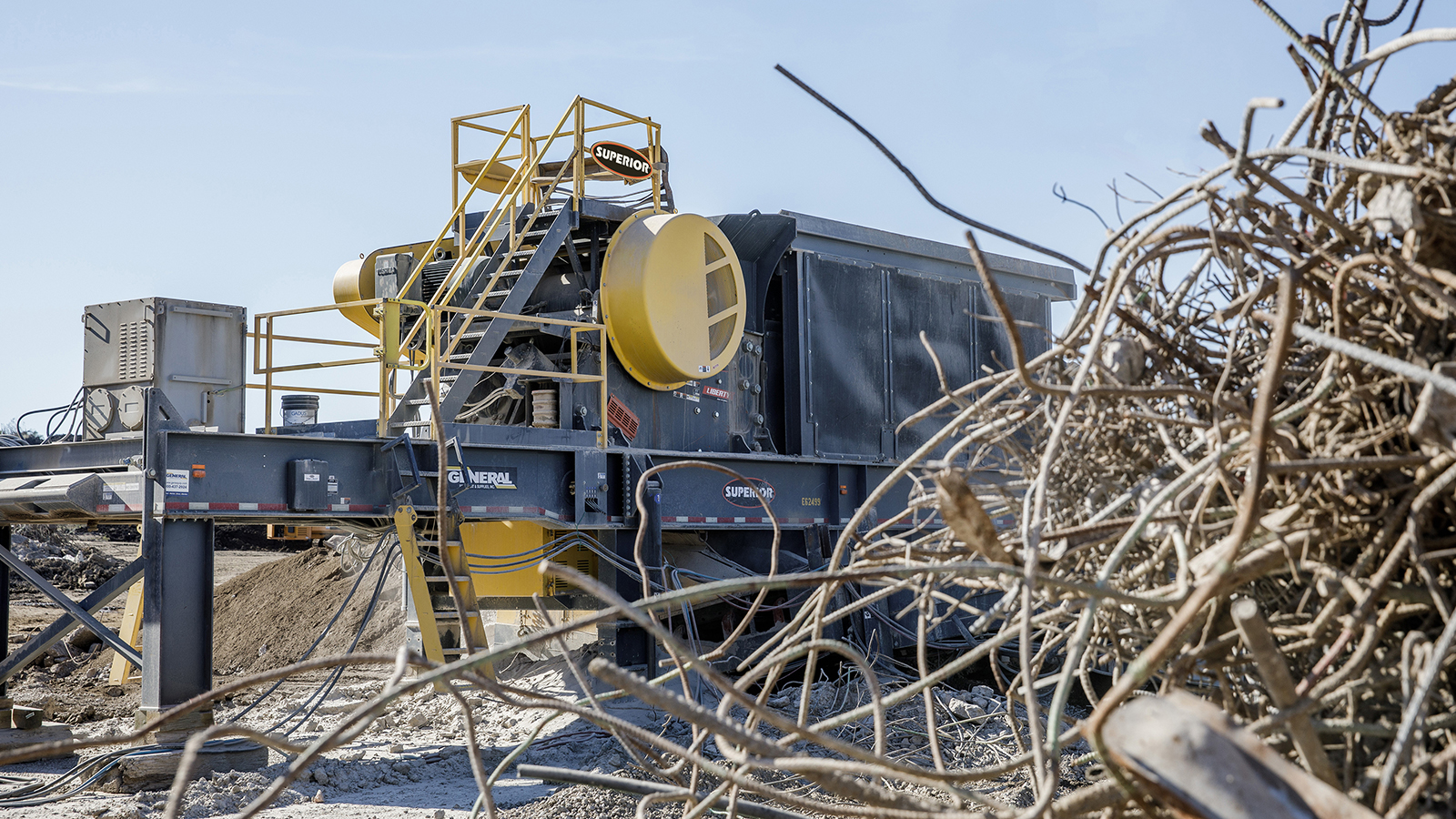
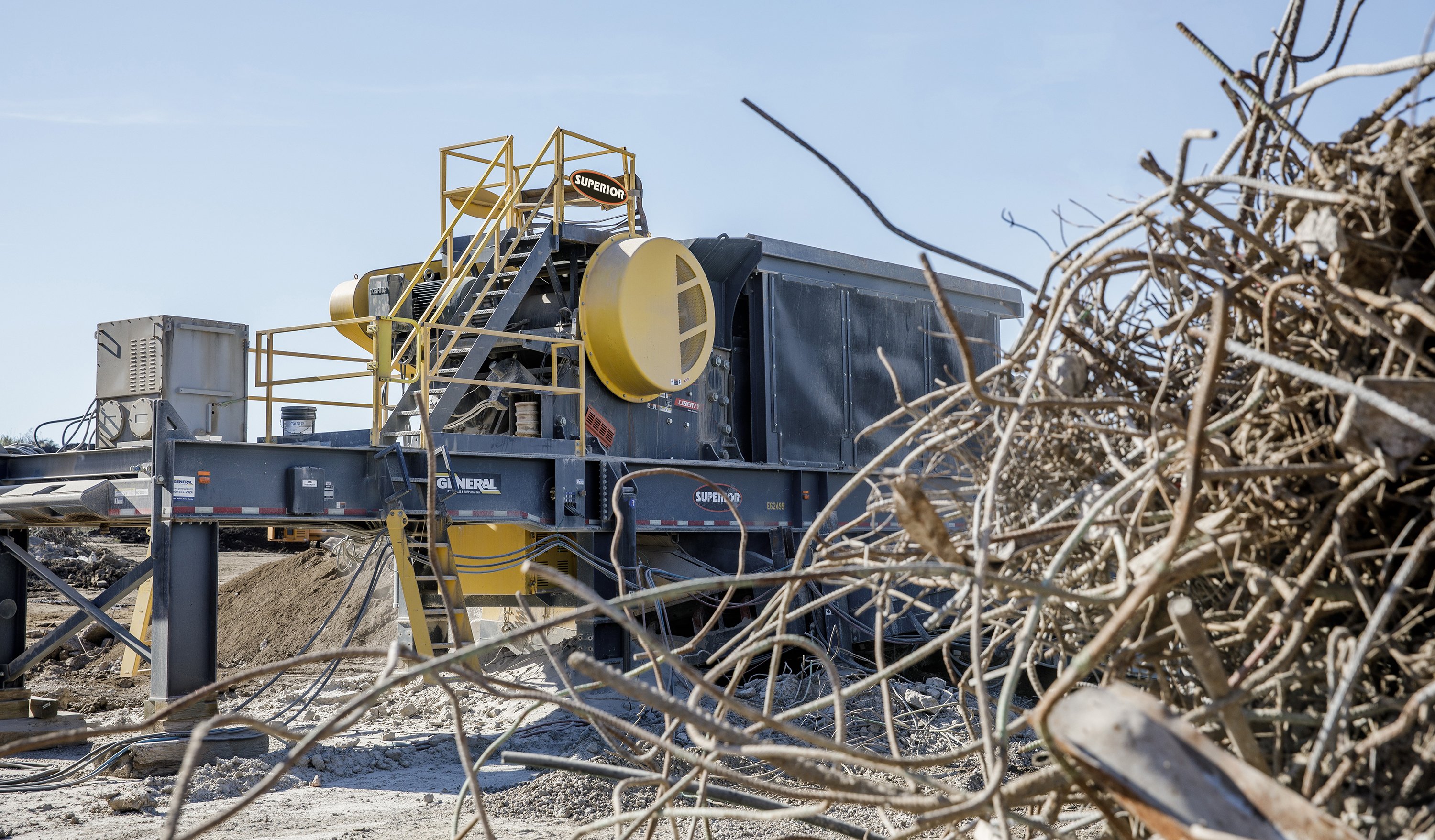
First Rate Excavate, an excavating contractor in South Dakota, is a good case in point. At its fixed location in Sioux Falls, the company recycles material using a 3363 Liberty® Jaw Crushing Plant supplied by General Equipment & Supplies.
“Customers bring their debris there, they sort the concrete from the asphalt, and then stockpile it,” Gray says. “Instead of moving equipment from job to job, they can accumulate material and process it on a predictable schedule.”
These facilities are particularly attractive prospects for Superior dealers because their processing needs can extend beyond what smaller track-mounted plants can economically deliver.
“They’re often looking for higher capacity,” Gray says. “Maybe 30 to 50 percent more throughput so they can achieve better operating costs.”
For these customers, a wheeled spread may offer advantages beyond increased production, particularly when handling the steel commonly found in demolished concrete.
“Wheeled portable plants sit higher off the ground, which creates better access to collect rebar and other steel from the material stream,” Gray says. “It makes metal removal easier and more effective than low profile track plants.”
Look Beyond Today's Operation
Don't assume recyclers who've long relied on track equipment will always operate that way. While some prefer moving from job to job, others may be looking to establish permanent sites with increased production.
“We see recyclers who have relied on track-mounted equipment for years reach a point where they’re ready to grow,” Gray says. “They’re looking to establish a permanent site and build a larger-scale recycling operation.”
For dealers, that makes it important to understand where a recycler wants to take their business, not just how it's operating today.
“Don’t get caught up in the assumption that recyclers are always looking for the lowest-cost equipment,” Gray says. “More and more of them recognize the value of investing in higher-quality machinery.”
 The Right Tools for the Rubble
Once dealers identify promising prospects, the next step is understanding what they're processing and what they want to produce.
Start with the incoming material: For operations handling large concrete slabs, a Liberty® Jaw Crusher is a strong starting point. The 3363 model, for example, has a wider opening that accommodates large pieces of concrete, reducing the need for hydraulic breakers before crushing.
For those processing smaller concrete debris or asphalt, a Sentry® Horizontal Shaft Impactor may be a better fit. These impactors use high-speed rotating hammers to break material apart, making them well suited for producing consistently shaped aggregate.
Consider the finished product: For recyclers who need to turn crushed concrete into smaller, more consistent sizes, a Patriot® Cone Crusher can provide secondary crushing.
Its tramp relief system helps protect against stray pieces of steel, while a high-pivot-point design helps draw irregularly shaped material into the chamber, reducing the potential for plugging.
Plan for steel removal: Separating rebar and other metal from crushed concrete is only part of the challenge. We also need to consider how that steel moves through the plant and where it's discharged.
“Our purpose-built recycling conveyor fits right underneath a portable plant and carries the crushed material past a magnet which removes the steel,” Gray says.
The conveyor was developed and tweaked in collaboration with General Equipment & Supplies, using feedback from early installations to improve flow and address areas where debris could hang up.
We're Just Getting Started
Recycling is becoming a bigger percentage of Superior's business, and Gray sees plenty of room for continued growth.
“We’re gaining momentum, seeing more interest in our equipment, and investing in ways to grow our presence in this market,” Gray says.