

- Crushing
Share This Post
The first shift on any new contract crushing job is more than a startup exercise. It's an opportunity to learn what the material is telling you and “dial in” the cone accordingly.
“A contract crusher should understand the relationship between feed size, fines, liner profile, speed, power draw and ring bounce,” says Jarrod Adcock, Superior's crushing product manager. “Then, use those observations to establish a healthy operating baseline.”
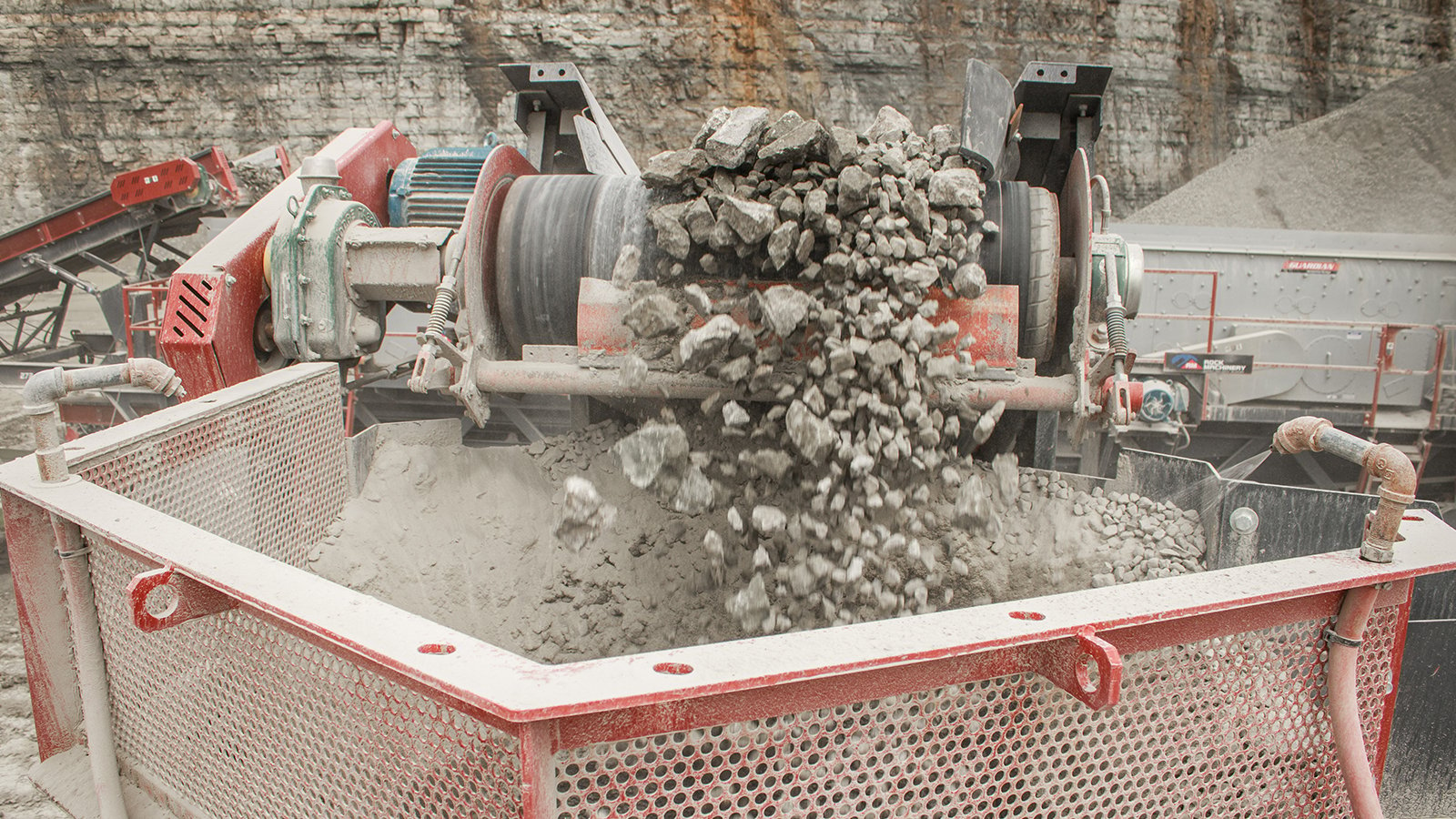
Once feed is introduced, watch how it enters the chamber, the size of the feed and the amount of fines it contains.
Start With the Liner Profile
When moving a cone from one application to another, make sure the liner profile matches the material being fed. A contractor, for example, may arrive on a job with a standard medium liner only to find the feed is larger than the profile can comfortably accommodate.
“You may notice that there's a lot of material floating around the top side of the cone head, and it's not going into the machine,” Adcock explains.
If the material is approaching the maximum feed size for the liner profile, slowing the crusher may help. If it doesn't, a coarser liner profile may be needed to allow more of the feed into the crushing zone.
Finer-than-expected feed can create the opposite problem. Smaller material usually moves too quickly through the chamber, concentrating more of the crushing near the bottom of the liner. One warning sign is ring bounce, when the adjustment ring begins to shake or bounce.
“If you’re noticing ring bounce for extended periods, it’s going to impact the life of your machine and can cause damage,” Adcock says.
Watch the Fines
In crushing, “fines” are the smaller particles in the feed material. Some fines are expected, but the percentage matters because smaller material moves through the crushing chamber differently than larger rock and can affect how the cone performs.
Adcock notes that when fines climb above roughly 15% of the feed, operators may begin to see increased power draw, ring bounce and unusual liner wear.
That’s why feed should be evaluated by more than its top size, or the largest material entering the crusher. Pay attention to the entire gradation.
Oversized material may struggle to enter the chamber, while too many fines can concentrate crushing near the bottom. Either condition prevents the crusher from operating efficiently.
The Liner Tells the Story
One wear pattern to watch for is what Adcock calls a “hook” in the liner. This happens when wear creates a curved, upward-projecting edge near the bottom of the mantle, almost like the end of a ski ramp. It’s an indication that too much of the crushing is taking place low in the chamber.
Changing the liner profile to better match the application helps distribute the crushing more evenly throughout the chamber, causing more even liner wear.
Alternatively, feeding material that is too large can produce excessive wear at the top of the mantle. That's because the material isn't dropping into the crushing zone and is instead impacting and crushing on the mantle cap.
“The mantle cap is for protection and not an actual crushing surface,” Adcock says. “If that cap is damaged or knocked out of position, you can’t crush.”
Don't Forget Speed
Changing the liner profile may also require adjusting crusher speed to properly balance the load and power going into the machine. Speed affects how material moves through the chamber, so a setting that worked well on the last job may not be the right fit for a different application.
That’s another reason to watch power draw and how the crusher responds after making a change. The goal isn’t simply to run faster or slower, but to find the speed that works with the material and liner profile so the machine operates consistently.
“That’s why dialing in a cone isn’t about finding one setting and walking away,” Adcock says. “Watch how the machine responds to the material and make adjustments until you bring the crusher into a stable range.”
Monitor Data Trends
What an operator sees at the crusher is only part of the story. Machine data can provide another view of how the cone is responding as feed conditions and settings change.
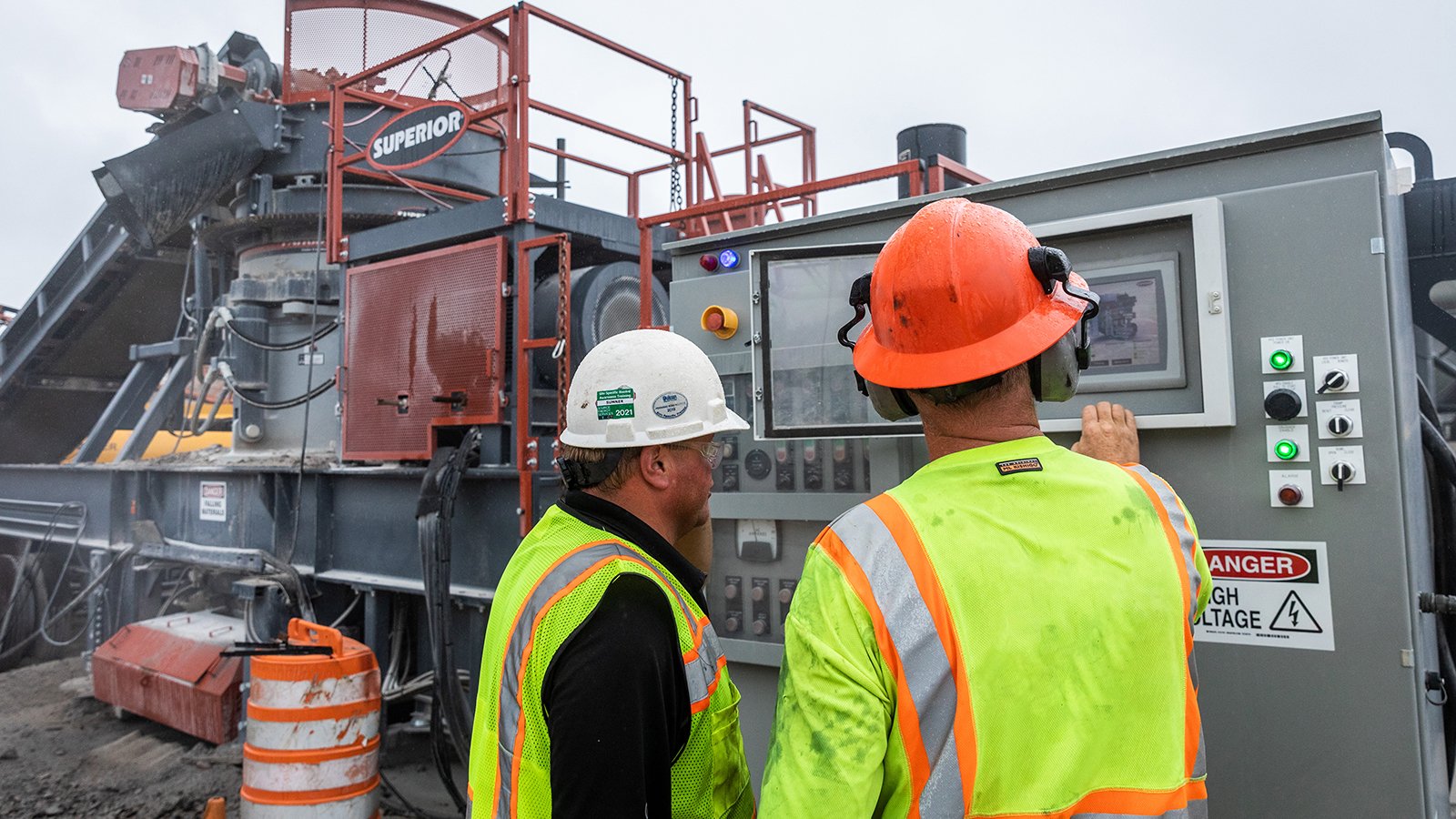
Superior's Vantage® Automation, for example, monitors temperatures, pressures, motor amps and vibration. If vibration begins trending outside the normal operating range, that data gives operators another reason to investigate conditions.
“The data isn't always going to tell you exactly what's wrong,” Adcock says. “It's live feedback on how the machine is reacting and often requires some investigation if there are issues.”
That feedback becomes especially valuable during the first shift on a new job. The goal is to establish a healthy operating baseline.
For a contract crusher moving from job to job, there isn't one setting that's right for every application, so learning what the material and machine are telling you during that first shift can help establish the right operating conditions for the work ahead.
Send this article to your inbox.
Want to read this later? Enter your info and we’ll email you a link to the article.