

- Washing
Share This Post
Both fine material screw washers and hydrocyclones can remove unwanted fines from sand, both can help producers meet product specifications, and both can be the right choice, depending on the application.
The difference isn't simply how they work, but it’s how they respond to feed conditions, handle water, recover saleable material and affect operating costs in your quarry or pit.
Here's how to determine which technology fits your operation.
How Do Screw Washers and Cyclones Work?
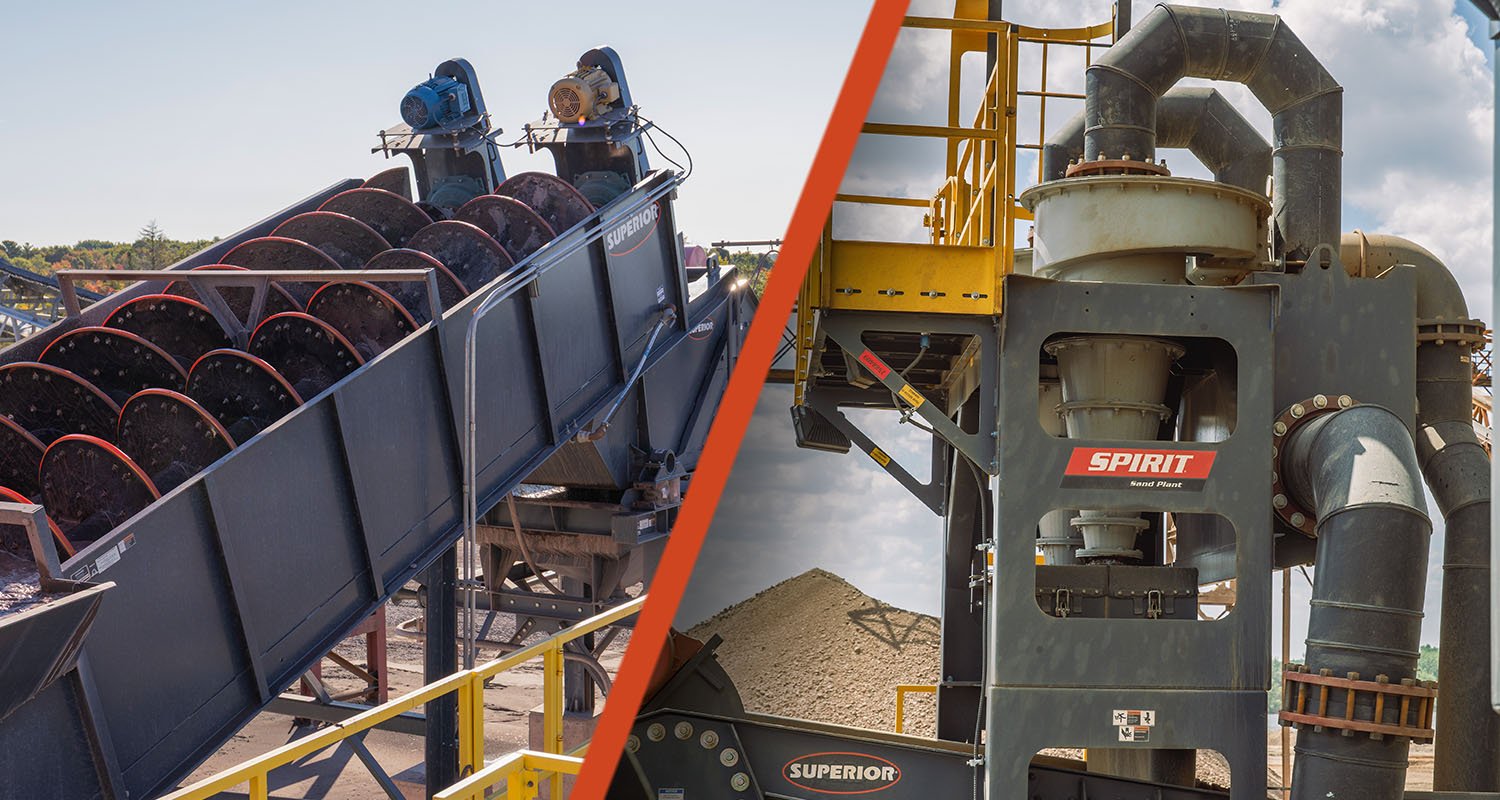
Fine material washers, often called sand screws, separate sand from unwanted fines using water and gravity. As slurry enters the tub, heavier particles settle to the bottom while water carries lighter fines over the weirs. A rotating screw moves the settled sand up an incline, allowing any excess water to drain before discharge.
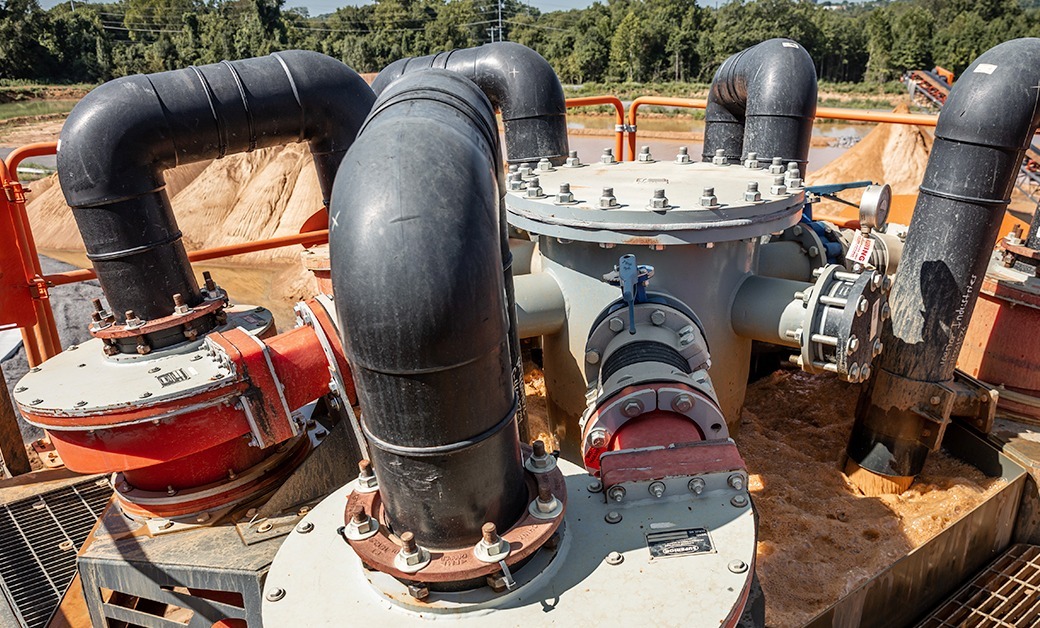
Hydrocyclones, sometimes simply referred to as cyclones, separate material by spinning a mixture of sand and water at high speed. Coarser particles move toward the outside and exit through the bottom, while finer particles and water flow out the top. A cyclone has no moving parts, but its performance depends on consistency of feed.
When Is a Screw the Better Choice?
1. Your Feed Rate Changes Throughout the Day
Screw washers are generally more forgiving of inconsistent feed rates. Consider a portable operation where a wheel loader alternates between feeding the plant and loading trucks. Production here fluctuates considerably throughout the day. A properly sized screw can continue producing consistent sand during these changes.
2. You Want Lower Power Requirements
Cyclone systems depend on pumps to maintain the pressure required for classification. Those pumps, along with associated equipment, can increase electricity consumption. Screw washers typically require relatively little horsepower for the tonnage processed. That doesn't automatically make them less expensive; however, when both technologies can produce the required sand, power consumption deserves consideration.
3. You Prefer Straightforward Maintenance
Most screw washer wear parts are accessible and relatively easy to inspect. Wear shoes, bearings and other components can often be replaced during planned maintenance and their condition is generally easy for operators to see. Although the cyclone itself has no moving parts, its supporting equipment introduces additional maintenance requirements.
When Is a Cyclone the Better Choice?
1. Your Sand Requires a Precise Separation
Cyclones are effective when an application requires a precise separation between coarse and fine particles. Their geometry and operating pressure help control which particle sizes are removed and which are retained. This is especially useful when producing sand that must meet tight gradation requirements, like frac sand and certain manufactured sands.
2. Your Feed Contains Substantial Fine Material
High fines content can make screws less efficient because more water is needed to remove them. If water volume exceeds the washer's capacity, valuable sand will overflow into settling ponds. Provided feed pressure and slurry density remain consistent, cyclones may be a better choice.
3. Available Space Is Limited
Cyclone systems can offer a more compact arrangement because much of the equipment is positioned vertically. A typical system includes a sump, pump, cyclone and dewatering screen. Its footprint is often smaller than that of a screw washer sized for the same application.
Can Screws and Cyclones Work Together?
In some applications, combining technologies produces better results than relying on either machine alone.
Consider a deposit containing a high percentage of material passing the 200-mesh sieve. Removing enough of those fines to meet a finished sand specification can require multiple processing stages.
Depending on the application, producers might:
- Add a second fine screw for additional fines removal
- Use a cyclone before a classifying tank to reduce fines entering the tank
- Combine cyclones with screws to achieve a desired gradation
- Incorporate a dewatering screen to reduce final product moisture
The goal isn't to install more equipment, but to remove unwanted fines while retaining the material needed to meet finished specifications.
Five Questions to Ask Before Choosing
- How consistent is your feed?
- How much material passes 200 mesh?
- What finish gradation must you meet?
- How much water is available or how much can be recovered?
- What does each cost per saleable ton?
A screw and a cyclone can produce similar finished sand under the right conditions, but getting there requires different amounts of energy, water, equipment and maintenance. Meeting specifications is only half the job if you're spending more than necessary or losing valuable sand along the way.
Send this article to your inbox.
Want to read this later? Enter your info and we’ll email you a link to the article.