

- Conveying
Share This Post
Every ton of aggregate or ore has to get from somewhere to somewhere else. Regardless of how it's transported, expenses accumulate throughout the journey.
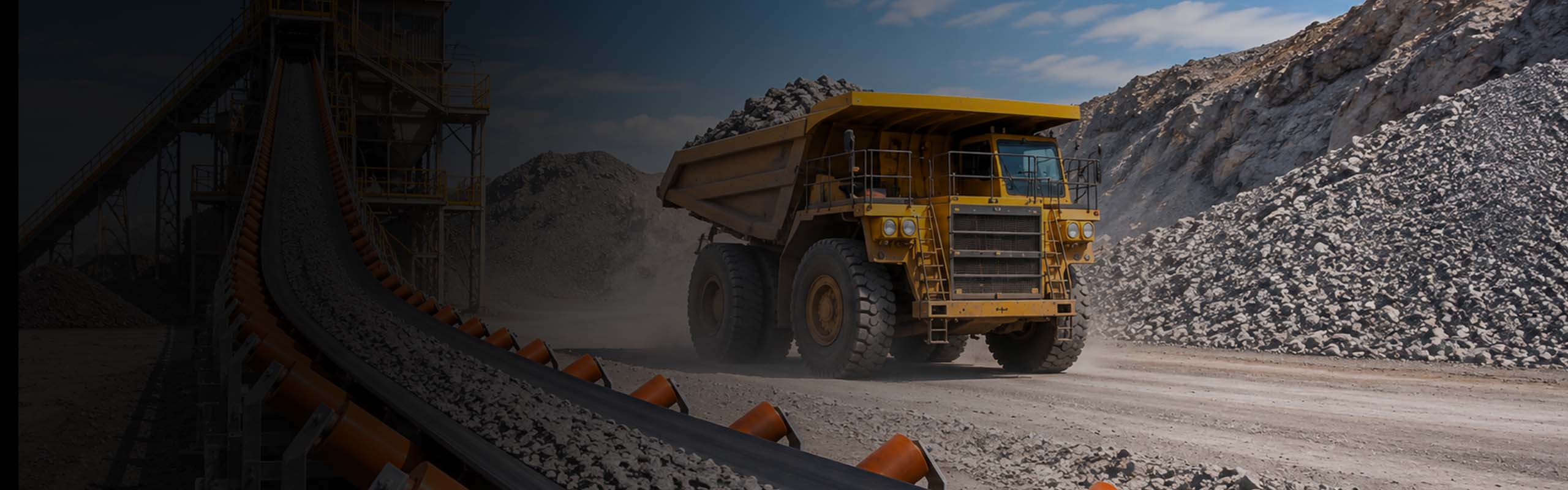
Haul trucks offer flexibility, especially when working faces and travel routes change. However, for material moving along the same route day after day, overland conveyors can offer a significant economic advantage.
Diesel prices are one reason to compare the two. Labor, maintenance, parts and production volume are just as important. Understanding how those expenses add up can reveal opportunities to reduce the cost of moving material.
Hauling Costs Go Beyond Diesel
Every truck trip involves more than fuel. Operators must be paid, tires experience wear and tear, engines require regular maintenance and haul roads need upkeep.
As hauling distances increase, cycle times get longer. Maintaining the same production rate may require additional trucks, bringing additional operating expenses.
Overland conveyors replace those repeated trips with a continuous flow of material powered by electricity. Although conveyors require maintenance and periodic component replacement, they generally require less labor dedicated to material transport.
The most useful way to compare the two methods is by calculating the cost per ton moved.
How to Calculate Cost Per Ton
Start by identifying the operating and ownership expenses associated with each transportation method.
| Haul Trucks | Overland Conveyors |
|---|---|
| Diesel fuel | Electricity |
| Operator labor | Maintenance labor |
| Tires and repairs | Belting, idlers and scrapers |
| Engine and transmission rebuilds | Pulleys, bearings and drives |
| Haul-road maintenance | Conveyor maintenance |
| Equipment ownership costs | Equipment and installation costs |
Once you've estimated the expenses, the basic calculation is straightforward:
Cost per Ton = Total Annual Transportation Costs ÷ Annual Tons Moved
Use the same production volume and operating period for both methods to make a meaningful comparison.
Then determine the potential savings:
Annual Savings = (Truck Cost per Ton − Conveyor Cost per Ton) × Annual Tons Moved
Production Volume Changes the Equation
Consider two operations: an aggregate quarry moving 500 tons per hour and a mining operation moving 2,500 tons per hour.
Both have material traveling between established points, but their production requirements are substantially different.
At the quarry, reducing transportation costs by even a small amount per ton can generate meaningful annual savings. At the mine, that same per-ton reduction has five times the impact when operating hours are equal.
The more material moving along a consistent route, the more opportunities there are for conveyor operating savings to accumulate.
Distance and Terrain Matter, Too
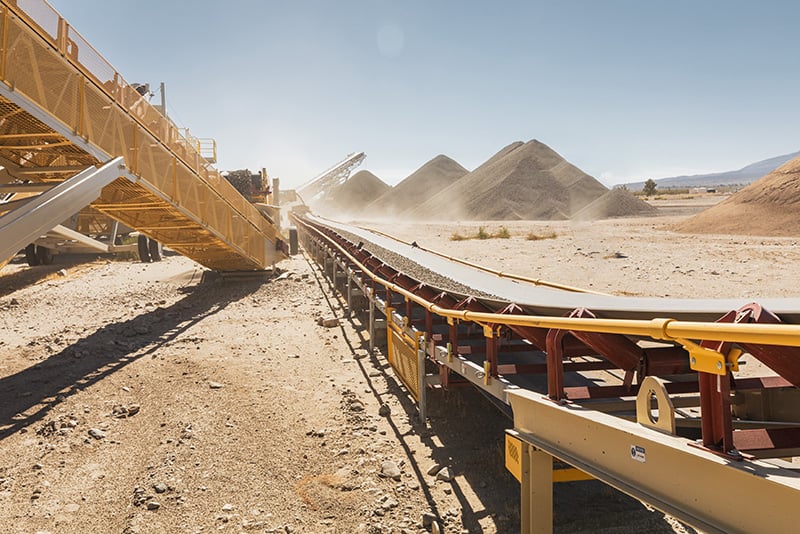
Overland conveyors don't need to stretch for miles to make economic sense. Even relatively short routes can justify consideration when material volumes are high and the transportation path is consistent.
For haul trucks, longer distances and steeper grades increase travel time and fuel consumption, reducing the number of trips completed per hour.
Conveyors can be engineered to follow terrain, climb elevation changes and cross obstacles without repeated return trips.
While challenging terrain can increase conveyor installation costs, the operating advantages may become more valuable as hauling distances and grades increase.
There isn't a universal distance where conveying becomes the better investment. The answer depends on the route, production requirements and expected operating life.
Fewer Trucks Deliver Other Benefits
The advantages of conveying extend beyond transportation costs.
A conveyor provides a continuous flow of material to downstream equipment, reducing the interruptions associated with truck loading and unloading cycles.
Fewer truck movements can also mean less dust along haul roads, reduced diesel emissions, lower traffic-related noise and fewer interactions between mobile equipment and personnel.
Material quality can benefit from conveying, too, as fewer loading and unloading cycles can reduce the risk of contamination and material degradation.
Five Questions to Ask Before Buying Another Truck
- How much material moves annually? Higher production volumes increase the potential per-ton savings.
- How far does it travel? Include grades, haul distances and return trips when evaluating productivity.
- How often will the route change? Consistent routes are generally stronger candidates for conveying.
- What does the current haul fleet cost? Account for fuel, labor, maintenance, road upkeep and replacement.
- How long will the route remain in service? Longer use means more time to recover the conveyor's initial investment.
Haul trucks have their place, but when material follows a predictable route, conveyors can deliver savings that add up year after year. Diesel prices will rise and fall, but the value of moving material efficiently never goes away.
Send this article to your inbox.
Want to read this later? Enter your info and we’ll email you a link to the article.