
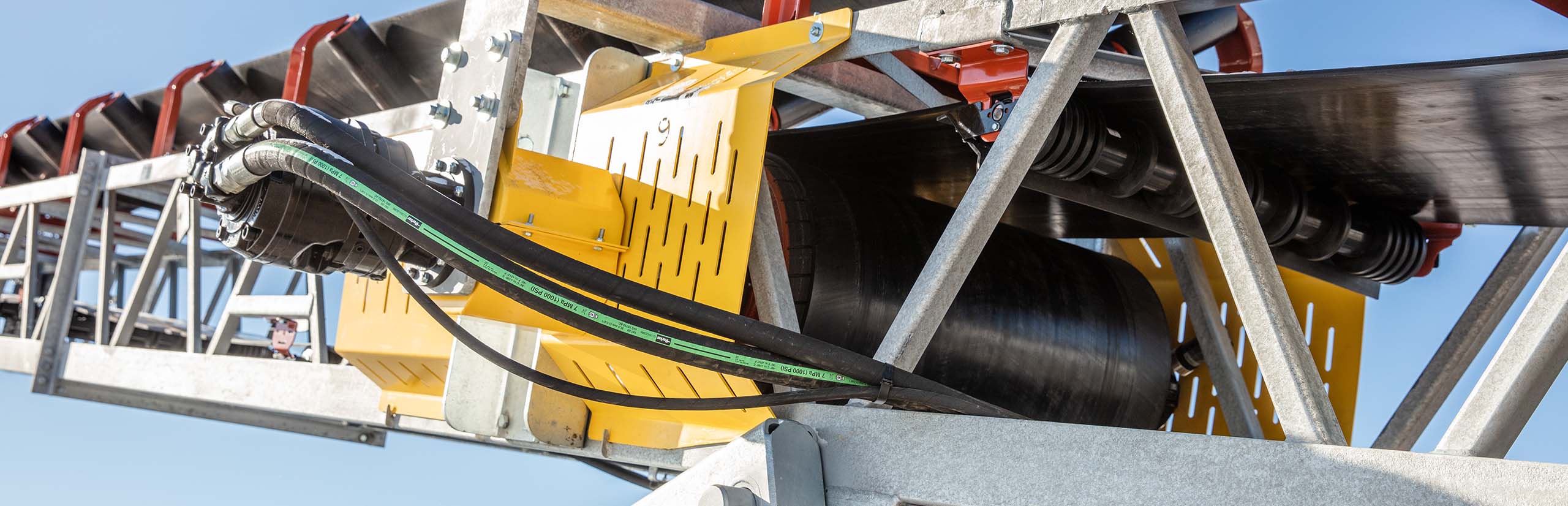

- Conveying
Share This Post
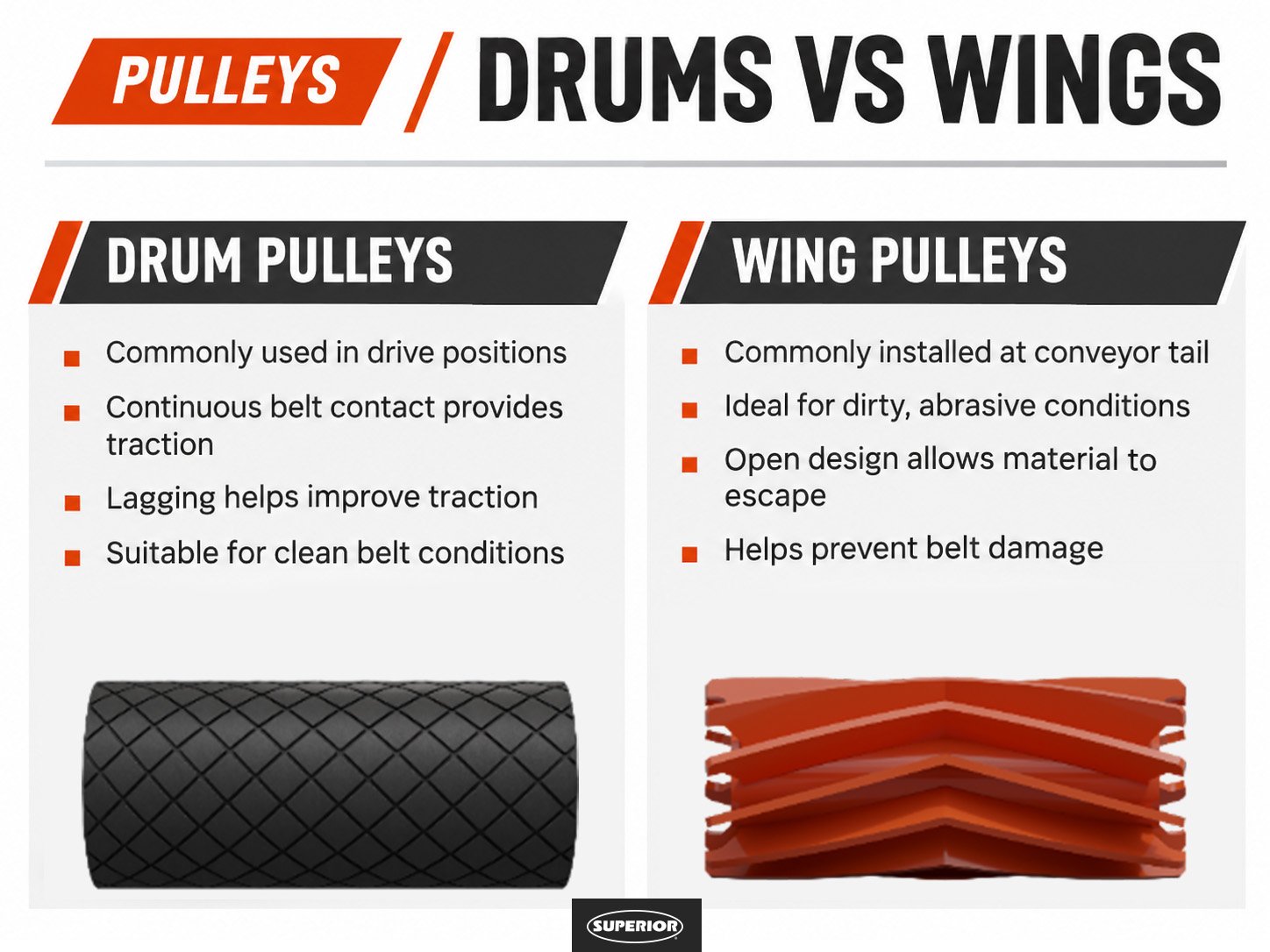
A drum pulley and a wing pulley can occupy the same general space on a conveyor while doing very different jobs. One provides a continuous surface beneath the belt while the other creates openings for material escape.
Choosing between them starts with the pulley's position and the conditions at that location, not which design happens to be available in the shop.
Start with the Drive
A drive pulley transfers power to the belt, so a drum's continuous surface combined with appropriate lagging help develop the belt contact and traction each application requires.
For a drive replacement, confirm the specified drum design, diameter, face width, shaft, lagging and operating requirements. Matching the outside dimensions alone does not establish that the replacement will be suitable for the conveyor.
Misplaced Material Needs Somewhere to Go
Whatever the material you’re handling, it belongs on the carrying side of your belt. Unfortunately, spillage can find its way onto surfaces where it does not belong, including between the belt and pulley.
At a tail pulley, trapped material can damage the belt as the two surfaces come together. However, a wing pulley provides spaces between its wings, which helps release that material rather than trapping it against a solid drum surface.
That makes wing pulleys useful in suitable non-drive positions where material entrapment is a concern. The tail is a familiar example, although certain bend and take-up applications may also benefit from a properly selected wing.
A Tail Is Not Automatically for a Wing
A drum pulley can be appropriate at the tail when the conveyor's design and operating conditions keep material from becoming trapped there.
In other words, the tail position alone does not make the decision. Instead, it’s the presence and behavior of material that do.
Think about where spillage enters, whether a belt plow or other protection is doing its job, and whether the pulley is regularly surrounded by accumulated material. Those observations help distinguish a pulley-selection problem from a containment or maintenance problem.
A wing pulley can help manage misplaced material, but it cannot make a buried tail section a healthy operating condition.
More Than the Wing Pattern
Straight-wing, angled-wing and other pulley designs do not all behave identically. Direction of travel is one important consideration, particularly on a reversing conveyor.
Some angled-wing designs, like Superior’s v-shaped Chevron® Wing Pulley, are directional. So, operators should confirm that the proposed pulley is suitable for the conveyor's operating direction or directions rather than assuming every self-cleaning design can run either way.
Also provide the manufacturer or distributor with the belt speed, material characteristics, loading conditions and the existing pulley specifications. Abrasive material may warrant different wear provisions, while belt tension and shafting still need attention regardless of the outer design.
Choose the Design and Address the Cause
The best result may involve more than a pulley change. Reducing spillage, maintaining the appropriate belt-cleaning and v-plow systems, and correcting material entry can reduce what the pulley must handle in the first place.
Keep guards in place and follow the conveyor's energy-isolation and stored-energy procedures before cleaning, inspecting or replacing components. Material buildup is never a reason to reach into a running conveyor.
For an application review, identify the pulley position and explain the problem you are trying to solve. "Material keeps getting trapped at the tail" is always more useful than "We need something heavier."
Send this article to your inbox.
Want to read this later? Enter your info and we’ll email you a link to the article.