

- Washing
Share This Post
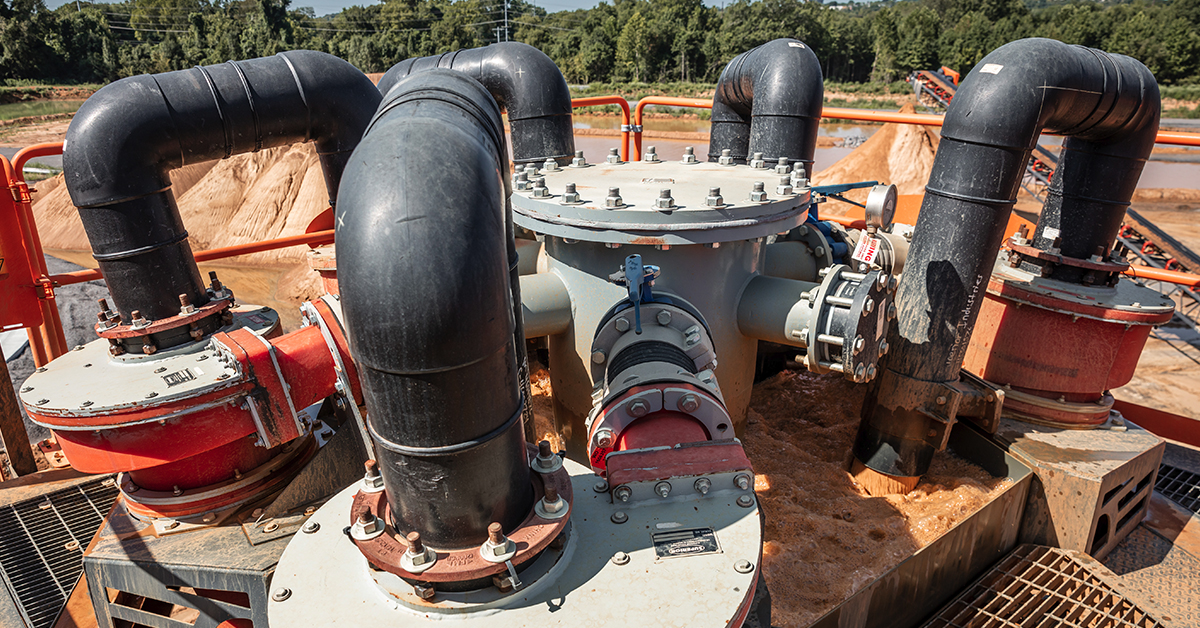
Hydrocyclones are widely used in aggregate washing applications to separate fine particles from slurry streams, yet many producers still misunderstand how they work and when they should be used.
Unlike most wash plant equipment, a cyclone has no moving parts. Separation occurs through centrifugal force generated within the unit, making cyclone performance highly dependent on feed consistency, pressure, and internal geometry.
"Cyclones are often misunderstood because operators can't actually see the separation process happening inside the equipment," says Lauren DeBow, washing applications engineer for Superior Industries.
What Is a Cyclone?
A cyclone, or hydrocyclone, is a classification device used in wash plants to separate fine particles from coarse material using centrifugal force. Cyclones are commonly used in aggregate washing applications where sharp material separation and fines recovery are required.
While the equipment itself is relatively simple, cyclone performance depends heavily on proper application, feed consistency, and internal design.
How a Hydrocyclone Works
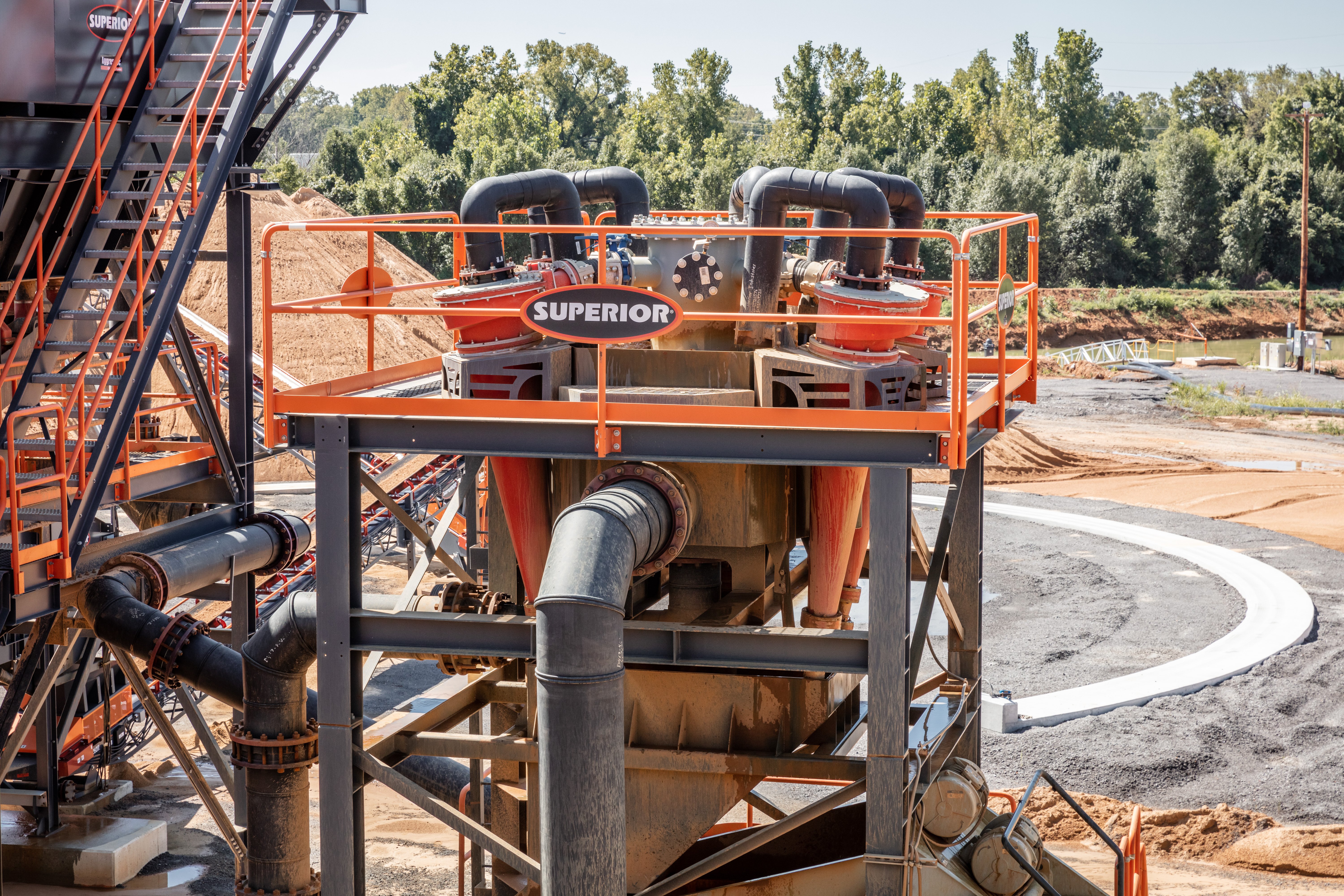
Material enters the cyclone through the feed inlet and moves into the feed chamber, where most of the separation process occurs. A vortex finder located at the top of the cyclone helps regulate feed pressure while creating the air core that drives centrifugal separation.
As material spins within the cyclone, larger and heavier particles are forced outward against the walls of the unit. These coarse particles travel downward through the cone section before discharging at the bottom of the cyclone.
Meanwhile, finer particles and water spiral upward through the vortex finder and exit through the overflow at the top.
The size of the vortex finder, along with operating pressure, plays a major role in determining cut size and separation efficiency.
Common Cyclone Misapplications
Cyclones are highly effective when applied correctly, but they are also commonly misapplied.
If a project requires a sharp, specific material cut, a cyclone can be an excellent solution and, in some cases, an alternative to a fine material washer. Many frac sand producers rely on cyclones for this reason.
However, a cyclone only makes a single separation cut. It creates a coarse product and a fine product, but does not blend materials the way a classifying tank does.
Every washing application is different. While a cyclone may outperform a fine material washer in some operations, it is not automatically the best solution for every plant configuration or material type.
Why Feed Consistency Matters
Cyclone performance is heavily influenced by feed volume, slurry density, and operating pressure.
When feed conditions remain consistent and material is relatively fine, cyclones can operate very efficiently for extended periods. However, inconsistent feed conditions or coarse material can negatively affect performance.
Large swings in feed volume throughout the day make it difficult for the cyclone to maintain proper separation efficiency. Constant pump adjustments to compensate for changing feed conditions can also disrupt operating pressure and reduce performance.
In applications with inconsistent or coarser feed, a sand screw may provide a more effective solution.
Choosing the Right Cyclone Design
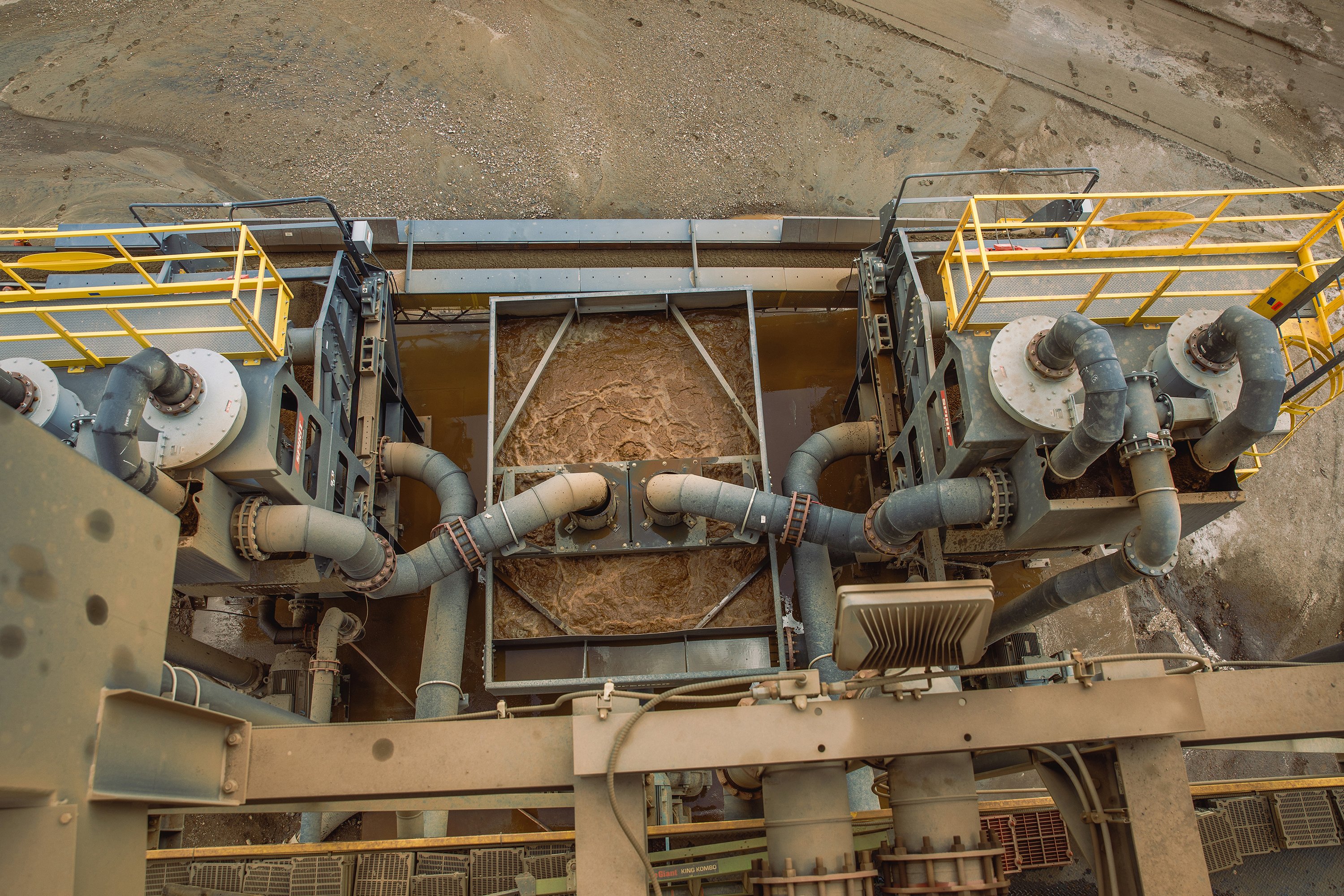
Cyclone performance varies significantly between manufacturers because separation efficiency depends heavily on internal geometry.
Feed chamber design and inlet configuration are among the most important performance factors. Many modern cyclones use a 360-degree inlet curve to improve material flow, reduce turbulence, and increase separation efficiency.
Cone angle also affects performance and cut characteristics. Cyclones are commonly engineered with cone angles ranging from 6 degrees to 30 degrees, depending on the application
For example:
- 30° cone angles are often used in sand production applications
- 10° are common for fines recovery before material reaches the pond
Selecting the proper cyclone design is critical to achieving the desired separation performance.
Send this article to your inbox.
Want to read this later? Enter your info and we’ll email you a link to the article.