
Published: February 2026
Portable plants are taking on jobs that used to belong to stationary spreads.
Producers like CRH and Amrize are deploying larger, heavier portable configurations to enter markets quickly, manage capital risk, and stay competitive on cost per ton.
According to Superior’s Devon McKinney, the equipment itself has evolved to make that possible.
“Now, we can put big jaws and big cones on these chassis and essentially treat them like a stationary plant," says McKinney, Superior's product manager of portable plants. "You get stationary-level production without locking yourself to one site.”
Stationary plants are, of course, still a viable opportunity. Superior’s Construction Management group, whose current backlog signals strong demand, can attest to that.
However, major end users seem to be considering portable plants like never before and for a variety of reasons.
Portables Accelerate Market Entry
Portable plants often provide the fastest path into a new market.
Instead of investing time and capital required to build a large stationary facility, more producers are deploying portable spreads to get material on the ground quickly and begin serving customers.
“To some end users, getting into new markets is more important than having the perfect plant there,” says Jeff Gray, director of sales at Superior. "Long permitting processes tied to stationary plants can drive end users down the portability path, as well."
Today’s portables are also being designed bigger and with more flexibility, taking production outputs to new heights.
There’s a financial driver behind the shift, as well.
“Normally, large stationary plants runs at a very low cost per ton,” Gray says. “When a crushing project is near a stationary competitor, portable operators pay closer attention to configuration and production efficiency so they are not priced out of the job.”
Customization Drives Superior's Advantage
As portable spreads grow in size and importance, so does the demand for customization. Producers want plants individually configured for their markets, their crews, and their production schedules, which plays directly into Superior's sweet spot.
“Customization can mean a number of things, whether it is special blending, tighter transport dimensions, or weight targets,” McKinney says. “If the plant is not going to move often, we can design removable modules, which allow end users to run larger crushers and screens.”
While some competitors prefer standardized designs that support consistent manufacturing, Superior embraces working through the details and designing for customization.
Relocation frequency plays a major role in how a portable spread should be designed.
"When you move a plant several times a year, even a two hour delay adds up,” Gray says. “Add in the costs of cranes, crew members, and extra loads, and producers are willing to invest upfront in a design that fits how they operate."
Standard portable plants still have an important place in the portfolio, but larger producers are leaning into Superior’s ability to tailor a complete spread to their operation.
“When a customer like CRH engages deeply with us, they gain access to the full engineering team behind the plant,” Gray says. “In one meeting, that might include a chassis engineer, crushing engineer, and an electrical engineer, who work together and customize the system to how the plant will be run.”
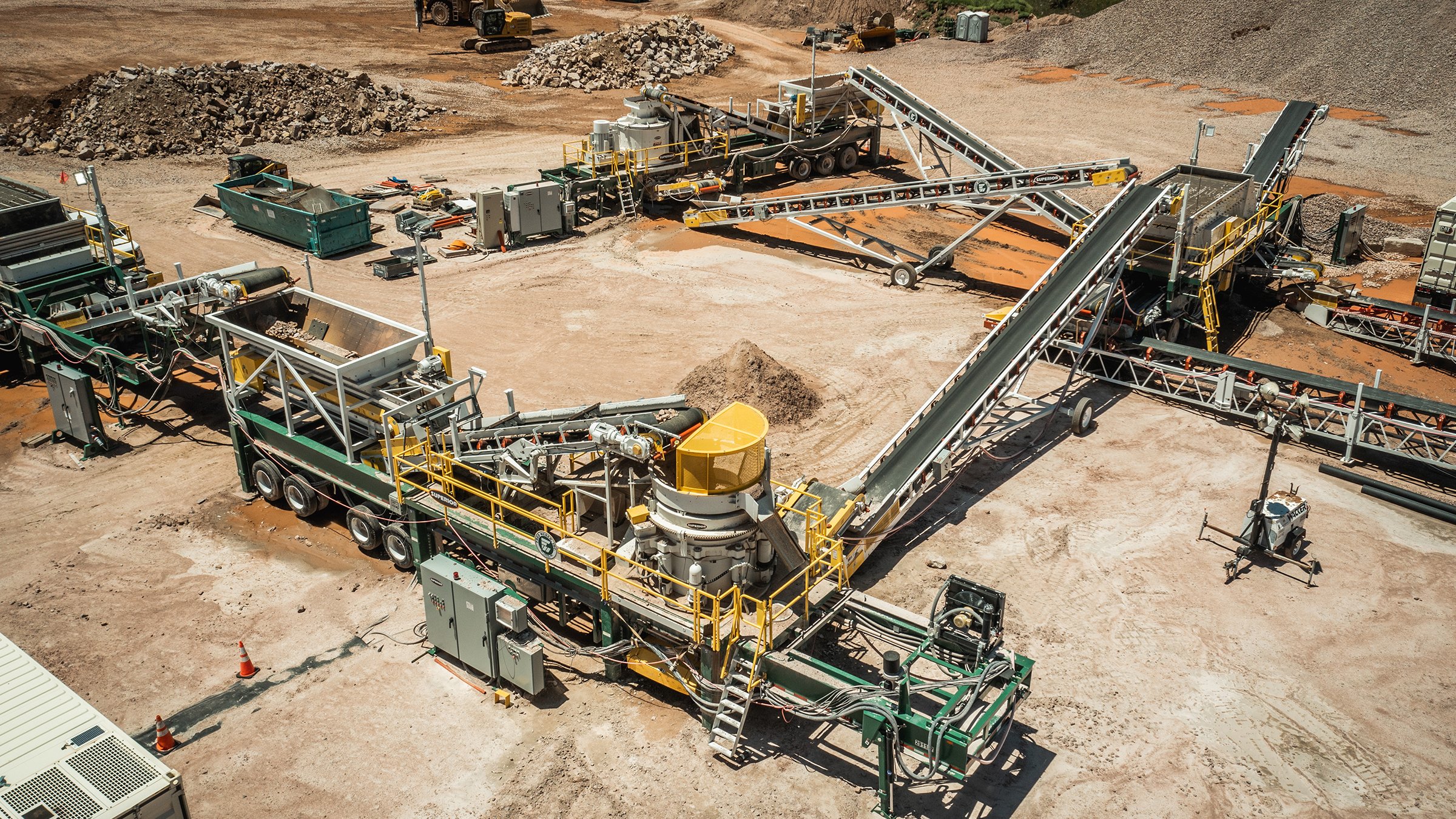 Another differentiator in Superior’s portable plant offering is the experience and willingness to design full spreads, allowing the entire plant to be engineered as one system rather than a collection of separate components.
Starting the Right Conversation
To get more such discussions going with end users, Gray has a few words of advice for dealers.
“End users don’t always want to tell you their budget, but it saves a tremendous amount of time if you can narrow it to within 20 percent," he says.
Timeframe and production volumes are other key details dealers should capture upfront.
“Producers have always shifted between portable and stationary based on their confidence in market demand,” Gray says. “What’s different today is that even the largest companies are relying on portable plants more than they have in the past.”