
- Systems
Share This Post
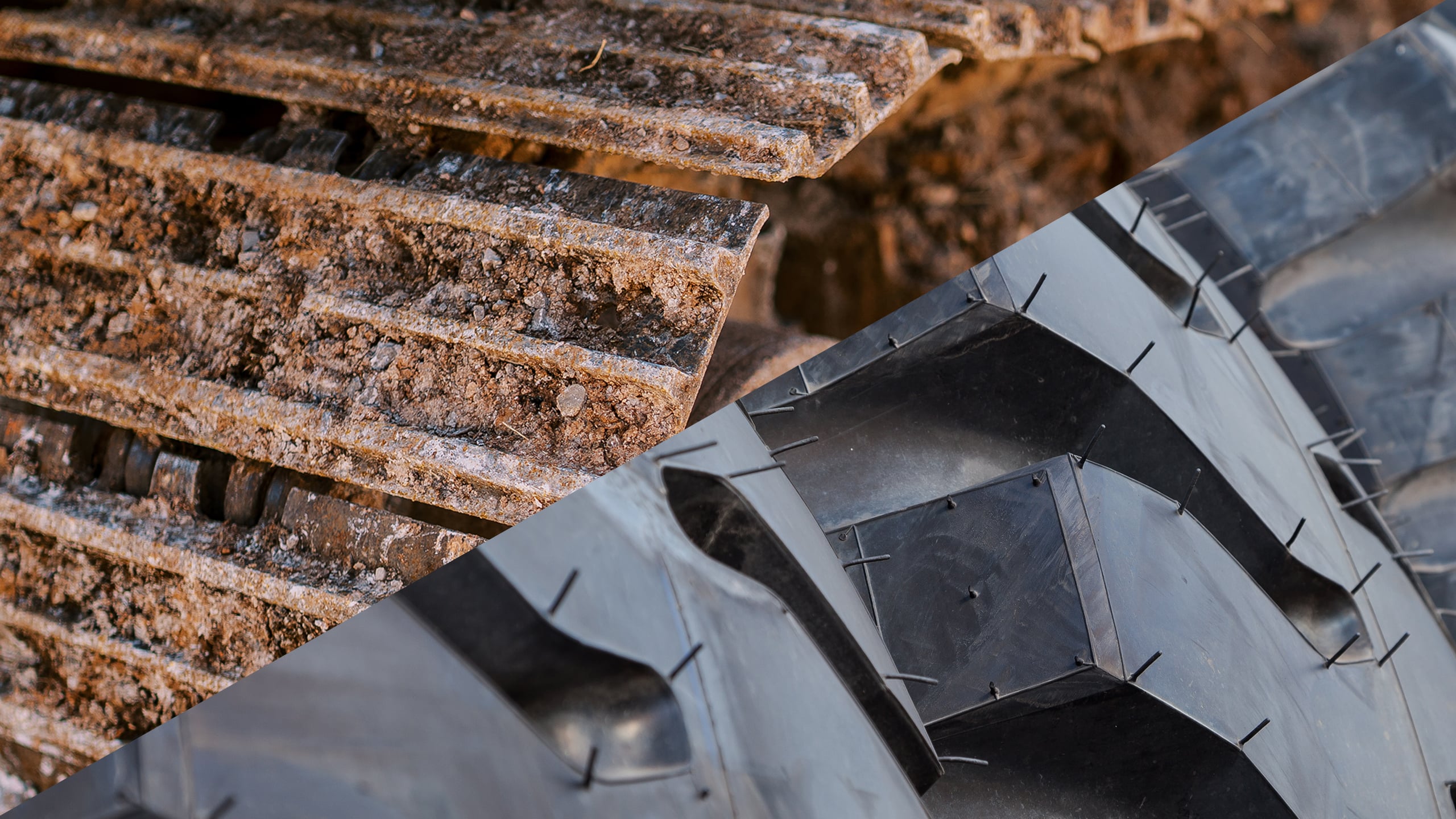
When mobility is part of the equation, aggregate producers generally choose between two plant configurations: tracked or wheeled. Both eliminate the need for permanent foundations, but each comes with different strengths, tradeoffs and long-term costs.
The first question any producer should ask isn't which plant is better, it's how often the operation actually needs to relocate.
"It really comes down to how often the users want to move their equipment," says Devon McKinney, portable plant product manager at Superior.
A producer working a single large pit who needs to shift position by 100 yards repeatedly, over a long stretch of time is a natural fit for tracks, he says. They're self-contained, and an operator can walk them into place with a controller.
Wheeled plants serve a different rhythm. McKinney describes them as the sweet spot for producers who move from pit to pit three or four times per year or even more frequently for roles like contract crushing.
“Some jobs last two weeks and others last two months and a wheeled plant is built to hit the road between them,” he says.
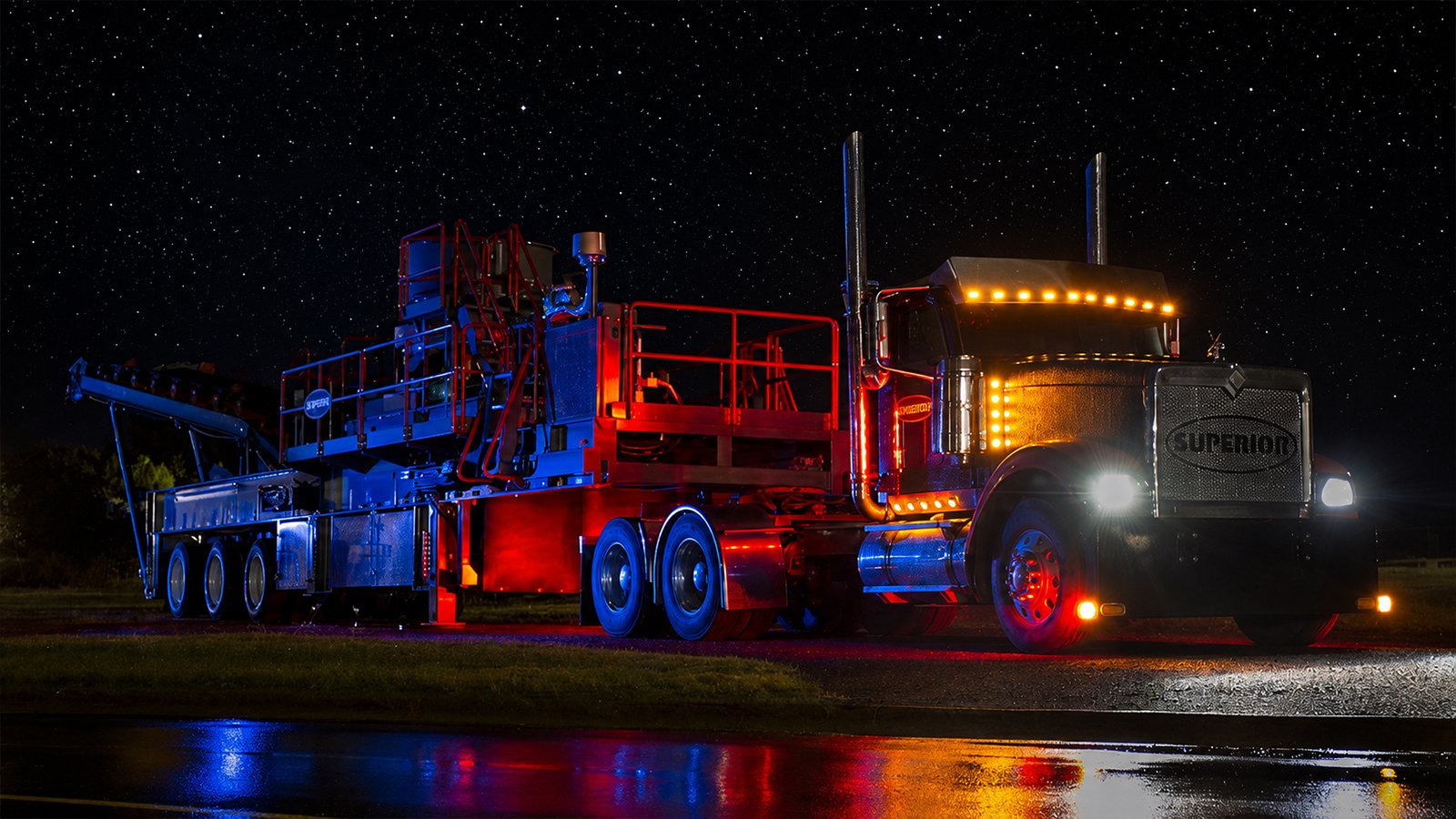
There's also a hybrid category worth knowing: pit portable plants. These wheeled units are trucked to a site, then leveled and supported on blocking or stands, where they essentially function as a stationary plant. Since they're not constrained by a tracked undercarriage, they can be outfitted with oversized jaws, screens and hoppers that go far beyond what a tracked chassis could carry.
In these applications, the wheels exist primarily to simplify permitting and transport to the site.
 Understanding Cost of Ownership
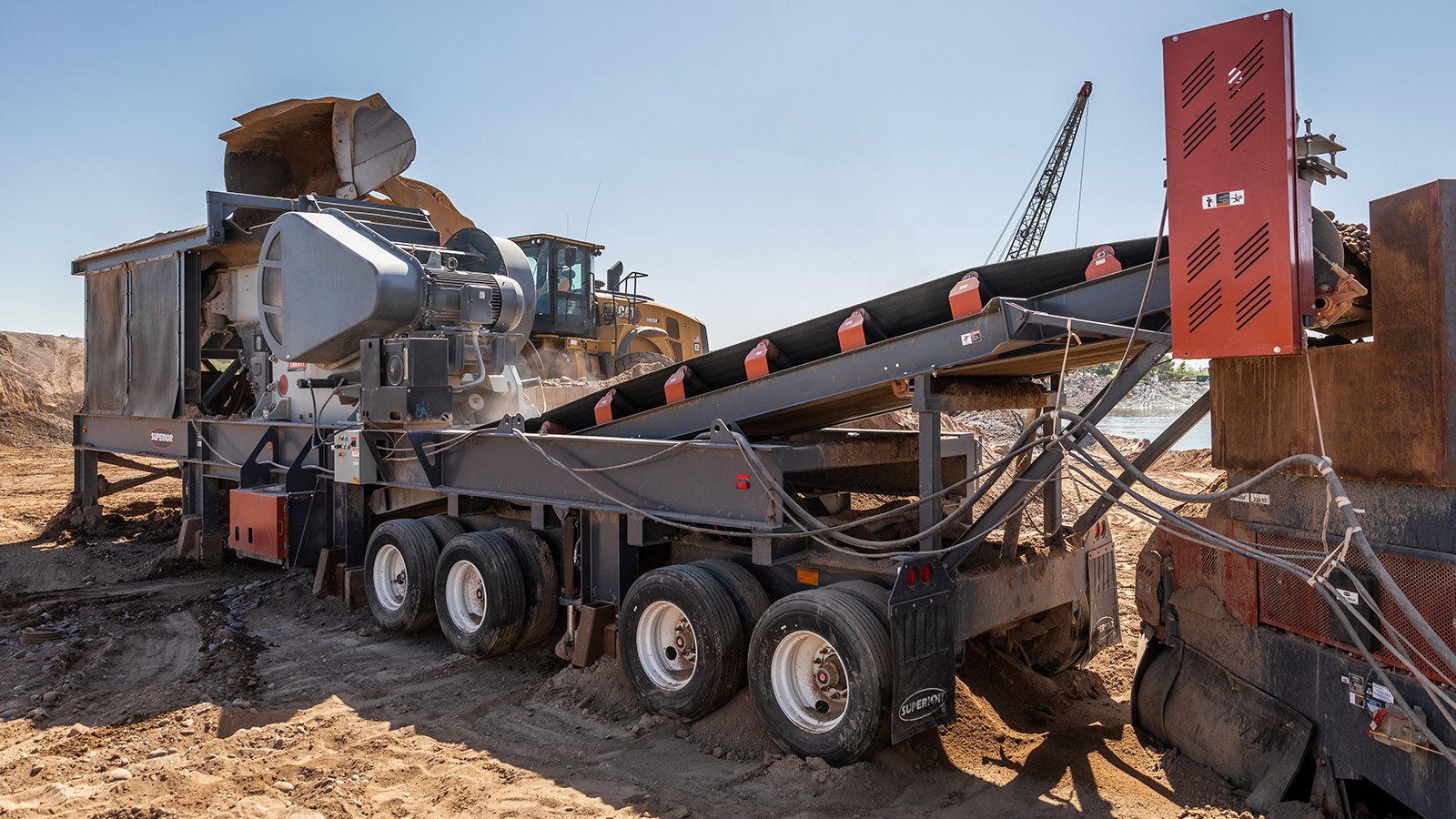
Moving day looks different for each platform. "Wheeled plants have the advantage of transporting over the road," McKinney says. "An operator can back up straight to the plant with a truck, hook onto it, and pull it out."
Tracked plants require folding conveyors, lowboy trailers, and securing for transport. Additionally, the added weight of the trailer and machine often results in higher permitting costs over-the-road.
Wheeled plants offer another structural advantage. Owners can add booster axles to increase hauling capacity, allowing them to transport heavier equipment over the road. That makes it possible to build wheeled plants with larger jaws, cones, and screens than tracked units can typically accommodate, since tracked plants must be loaded onto lowboy trailers that are constrained by height and weight limits.
Maintenance is where the gap widens most. Tracked plants are almost always self-contained, running on an onboard diesel engine that powers the entire unit. When that engine has a problem, the consequences cascade.
"If something goes bad in one of those motors, not only is your entire plant down, but it could be dead in the water," McKinney says. "When the motor fails, you can't move the tracks."
In some cases, that can mean bringing in a crane just to relocate the plant for repair.
Compactness compounds the problem. McKinney said dealers and technicians regularly tell him they get frustrated working on tracked units because something as simple as swapping a hydraulic hose can require disassembling half the machine to reach it.
Wheeled plants sidestep much of this. Many run on shore power rather than an onboard diesel engine, which McKinney says removes both the fuel cost and the engine maintenance burden entirely. It’s essentially a plug-and-go option.
 Looking Beyond Mobility
McKinney feels the biggest blind spot producers have when it comes to choosing is more emotional than technical.
"There’s a wow factor with tracked plants," he says. "The ability to nudge a conveyor 10 feet or shift a unit a few feet with a remote control is genuinely impressive, but that appeal can overshadow the math."
Track units typically carry a higher upfront cost, more maintenance downtime, and a constant diesel appetite that adds up over a season.
According to McKinney, longevity may be the most underrated factor
"After ten years of use, a tracked plant might have a worn-out undercarriage, an exhausted engine and damaged hydraulics,” he says. “With a wheeled plant, a new electric motor will have it up and running within an hour and tires are much easier to source and replace."
None of this makes tracked plants the wrong choice. They earn their keep in operations that genuinely need daily, in-pit repositioning. However, for producers evaluating total operating cost rather than mobility alone, wheeled plants tend to offer a simpler, open layout, lower long-term maintenance demands, and the flexibility to scale up equipment size.
Send this article to your inbox.
Want to read this later? Enter your info and we’ll email you a link to the article.