

- Washing
Share This Post
Learn how the right screw washer shoe maintenance and material choice can save years of downtime and costly repairs, with insights from Superior's John Bennington
Understanding Wear Patterns
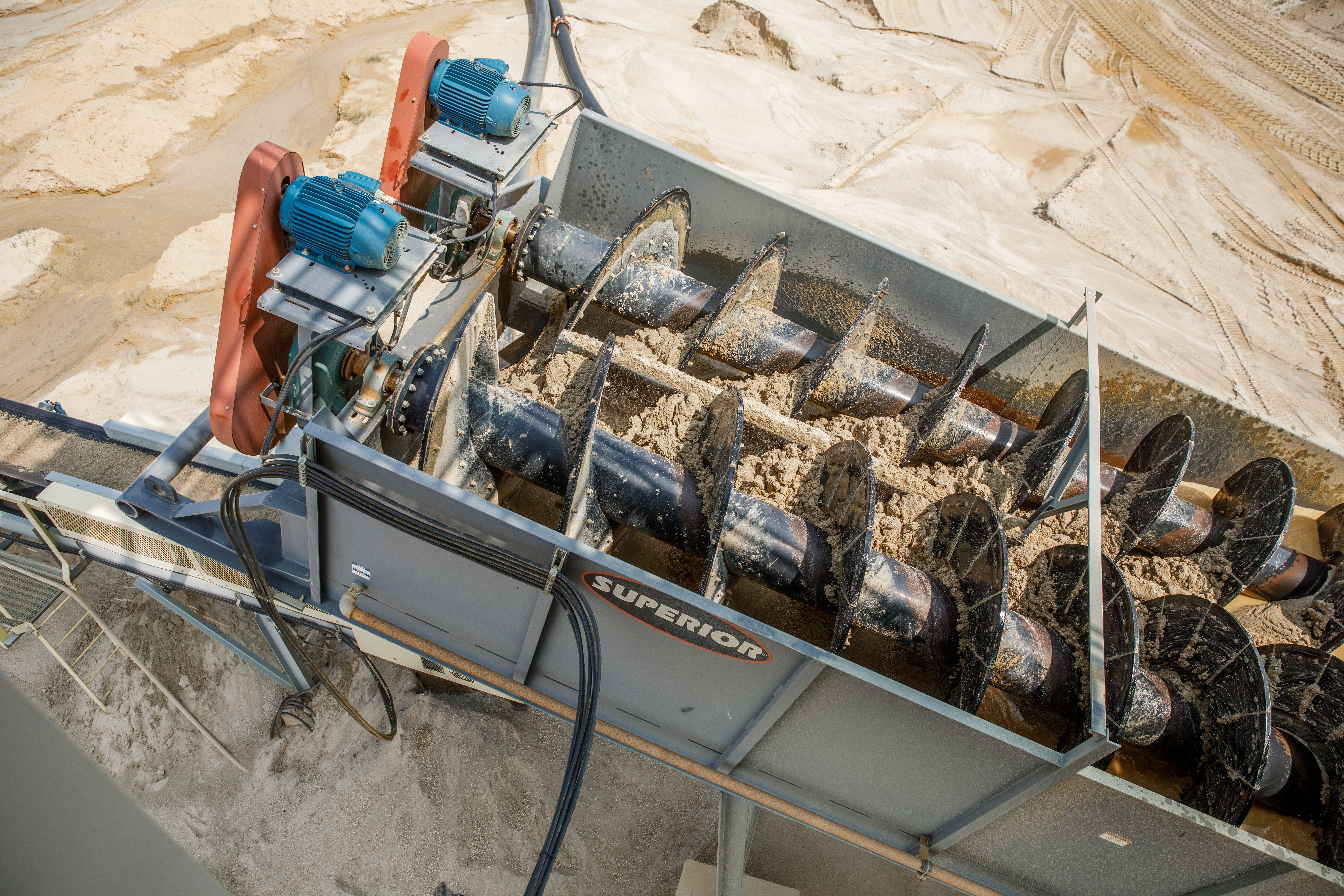
In terms of screw washers, the shoes protecting flights will inevitably wear. Experience, however, shows that shoes follow a typical wear pattern from day one in most sand applications involving a brand-new machine.
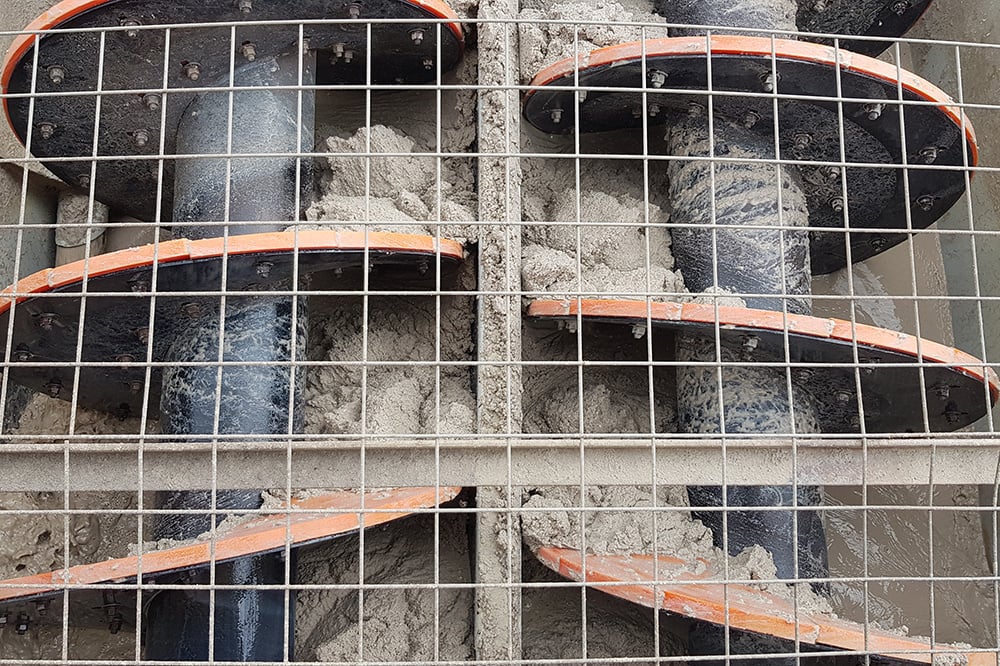
“In a normal sand screw, when everything is running as it should be, you can expect the middle third of wear shoes – the ones connected to the shaft right around the water line – to wear out in about three or four years,” says John Bennington, product champion of washing at Superior Industries. “The following year, the shoes at the tub's discharge should wear out. And the year after that, the ones underneath the water, at the feed end, will wear out.
The Consequences of Untimely Maintenance
“What that means is that after about three or four years, you should be replacing one-third of your shoes every year until you stop using the machine,” he adds.
According to Bennington, this is the most cost-effective route operators can take with their shoe maintenance. Still, despite a pattern that offers simplicity, most operators put this routine aside with the aim of simplifying maintenance further.
Unfortunately, such attempts tend to backfire, resulting in even more intense maintenance and additional downtime.
Selecting the Right Shoes for the Job
Instead of a short shutdown to replace a full set of shoes, operators find themselves out of commission for a couple of days because flights must be cut off and replaced with new ones.
“A lot of times, we’ll get orders from customers for a set of shoes for an entire shaft,” Bennington says. “What that tells me is that at least one-third of those shoes are being replaced two years later than they should be.”
Utilizing the wrong shoes for the application at hand continues to plague operators, as well. Shoes are commonly made of materials like A532 cast iron (Ni-Hard), rubber and urethane, with each offering advantages in distinct applications.
“Urethane and rubber don’t like to be cut because that causes them to wear out faster,” says Bennington, adding that these materials are lower-cost yet feasible options in natural aggregate applications.
Ni-Hard is the best option for shoes when working with crushed aggregates, high-silica feed, glass or metals, he adds. Rubber is particularly useful in applications such as natural aggregates, crushed limestone or frac sand.
In natural material, Bennington says rubber outlasts Ni-Hard. “Ni-Hard is kind of the straight line,” he says. “No matter what you feed it, it wears at a certain rate per ton, whereas rubber wears slower in natural material and faster in sharp material.”
Urethane can perform well in natural material, Bennington adds, proving as viable as rubber. Urethane is not the strong performer rubber or Ni-Hard are with sharp material, though. “It’s a little bit worse as far as wear characteristics than rubber or Ni-Hard would be,” Bennington says.
Send this article to your inbox.
Want to read this later? Enter your info and we’ll email you a link to the article.